From cereal killers to high-fibre bread: the importance of networking in the wheat research community
Dr Eleri Tudor, Delivering Sustainable Wheat (DSW) Programme Manager, and her colleagues attended the DSW Institute Strategic Programme (ISP) annual meeting at Rothamsted Research earlier this year. She reflects on the value of collaboration in achieving strategic aims, and how this event is vital in bringing the wheat research community together.
DSW is a large, cross-institute strategic programme – with four BBSRC-strategically supported institutes (including JIC), five universities, the National Institute of Agricultural Botany and the Norwich Institute for Sustainable Development working in partnership.
The programme’s annual meeting brings together wheat researchers from across the UK to share ideas addressing the challenges facing global wheat production.
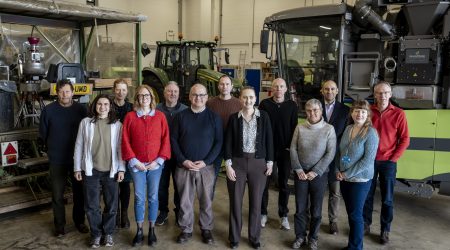
In 2025 the meeting was hosted by Rothamsted Research, where we were joined by researchers from across DSW, our associate members, industry stakeholders, the Agriculture and Horticulture Development Board (AHDB), and our Advisory Group. With researchers from across such diverse research areas, this was a valuable opportunity to get together, foster collaboration, and exchange knowledge.
Collaboration is essential to meeting the aims mapped out in the programme as a whole: working towards creating a sustainable supply of nutritious wheat for carbon efficient farming, and global food security.
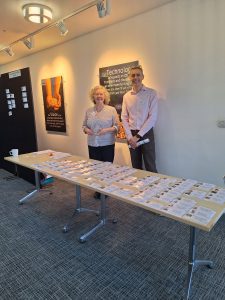
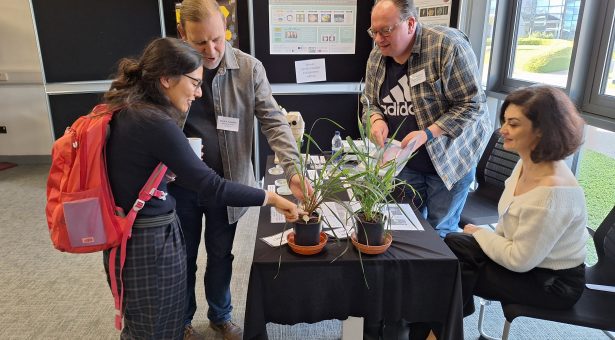
After a warm welcome, Dr Lawrence Bramham, Head of the Insect Survey at Rothamsted Research, chaired the morning session of flash talks. This year, rather than detailed science talks, speakers from key research themes from across DSW introduced a science showcase that was displayed during networking sessions.
It was amazing to see the diversity of cutting-edge DSW research and its impact in the wider world displayed in such an engaging and creative way.
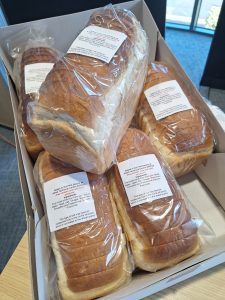
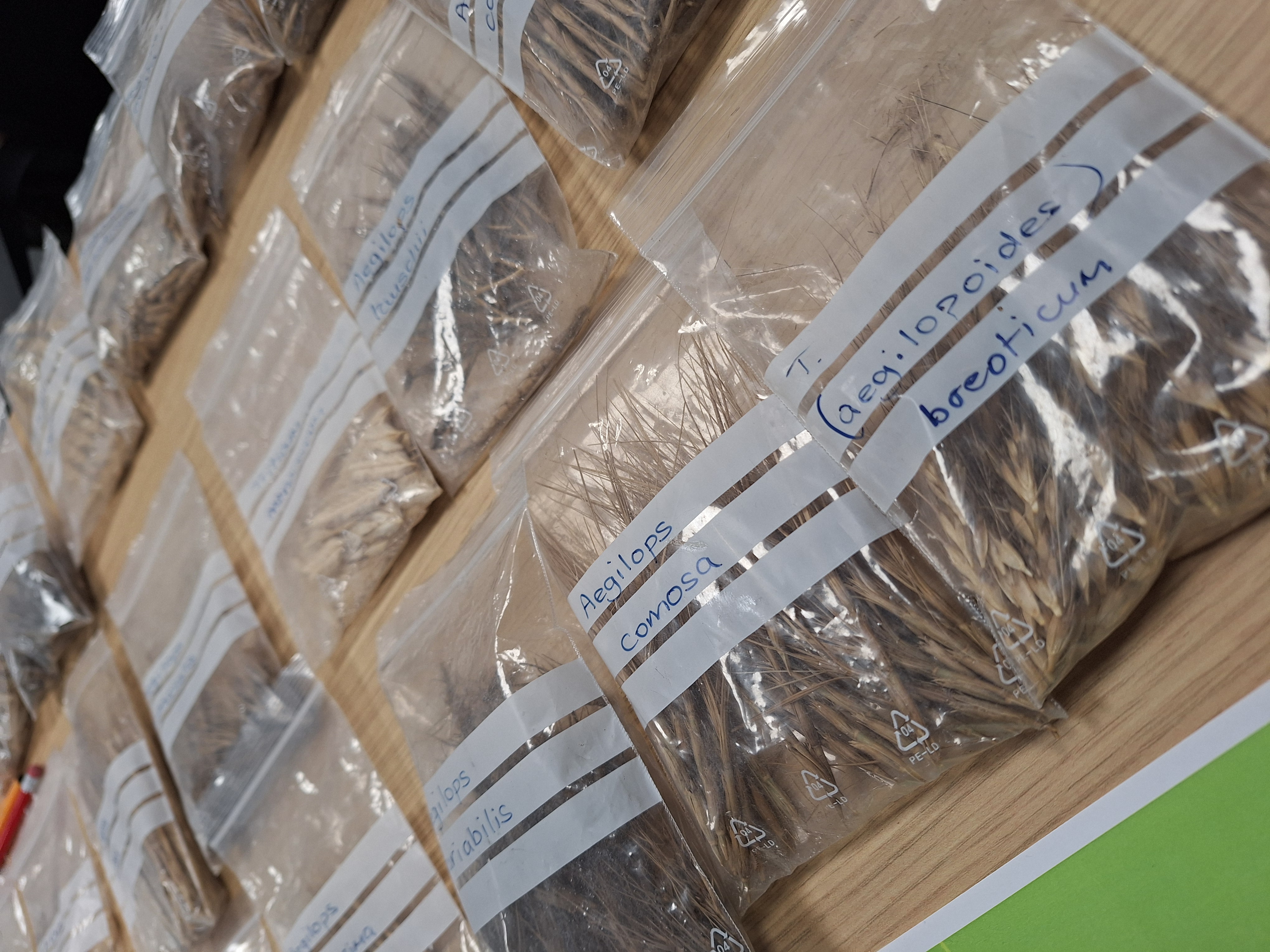
For example, we had the opportunity to taste high fibre white bread made from wheat germplasm identified by Dr Alison Lovegrove and colleagues, and Jade Van-Wijk brought along AirSeq equipment developed at Earlham Institute, as part of a display on “cereal killers.”
Other showcases such as the Wheat transformation and gene editing team from the John Innes Centre, the Crop Transformation and Genome Editing Unit from Rothamsted Research, and the Germplasm Resource Unit demonstrated more of the incredible tools and resources available to the wheat community.

Underpinning the whole event was a reminder from Dr Richard Leggett, group leader at Earlham Institute, and colleagues that outcomes from DSW are most impactful when we continue our commitment to make the data we generate “findable, accessible, interoperable, and reusable”. Find out more about the resources DSW is generating on the DSW website.
Data and discussions were shared at the lunchtime networking, science showcase, and poster session, where Dr Jennifer Ahn-Jarvis won this year’s poster prize for her poster on “Crops to the Clinic to the Colon: Dietary Intervention Trials at Quadram Institute Bioscience” – congratulations Jennifer!
We found further inspiration in the second session, hearing talks from Professor Diane Saunders OBE and Dr Rachel Goddard, a JIC alumnus and now Cereal Pathologist at Limagrain, about the Rosalind Franklin Women in Wheat Champions Mentoring Programme.
Rachel spoke about her career journey from wheat research in academia to supporting cereal breeding as a pathologist in industry, and how her Women in Wheat mentor supported her to make this transition. You can read more about her career story in this year’s Advances alumni article.
We rounded off the day with a forward look and a panel discussion with Chris Darby from the Norwich Institute for Sustainable Development, who leads The Demand Side Task Force alongside our recently formed DSW Advisory Group.
Our Advisory Group bring a wealth of expertise and represent the plant breeding industry (Limagrain and RAGT), growers (AHDB), and academia (the Universities of Reading and Leeds). They help inform the current DSW programme and guide the future direction of wheat research. The Advisory Group reaffirmed the need for collaboration with industry, and the importance of communication and dissemination of research impact to the wider wheat community.
Personally, I started my role as Programme Manager for DSW a year ago and I have found the wheat research community to be welcoming, collaborative and, above all, positive about the power of their research and what they can achieve as a multidisciplinary team.
Having previously worked in the plant breeding sector, I have been able to maintain old connections and create new ones through DSW. The more connections you build in areas of research that interest you, the more likely you will find a role that you enjoy.
If you are interested in wheat research (perhaps you’re thinking about a MSc or PhD, considering the next stage in your career, or looking to create new collaborations) I would recommend learning about the organisations mentioned in this blog and reach out to us at DSW. Make new connections and build your own network!
We would like to thank:
- All the speakers who attended the DSW Institute Strategic Programme (ISP) annual meeting.
- Colleagues who presented their science showcases, including:
– Anthony Hall, Jade van Wijk, Rachel Rusholme-Pilcher and Simon Tyrrell from Earlham Institute.
– Begum Celik from Imperial College London.
– Abdul Kader Alabdullah, Roshani Badgami, Sadiye Hayta and Sarah Collier from the John Innes Centre, and Simon Orford from BBSRC National Bioscience Research Infrastructure: Germplasm Resources.
– Craig Sturrock from the University of Nottingham.
– Alison Lovegrove, Andrew Riche, Erika Kroll and Vladimir Nekrasov from Rothamsted Research.
- Organisers Roger Berwick (JIC), Sue Steele (Rothamsted Research) and Eleri Tudor (JIC).