
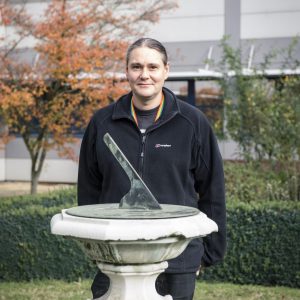
The Dodd lab investigates how circadian rhythms adapt plants and microorganisms to their fluctuating environments.
The Earth rotates on its axis every 24 hours, causing daily cycles in environmental conditions that impact life. This rhythmic environment has led to the evolution of circadian clocks, which produce a biological measure of the time of day. Circadian clocks allow organisms to coordinate their activities- from metabolism and physiology to behaviour and interactions- with daily and seasonal changes in the environment. Through these processes, the circadian clock contributes to the fitness of organisms.
The Dodd lab adopts molecular, physiological, and ecological approaches to investigate fundamental and more applied aspects of chronobiology, such as:
- Adaptation of plants to daily and seasonal changes in the environment, through the integration of circadian timing signals with other environmental cues. This involves a combination of laboratory and field studies.
- Circadian regulation in non-photosynthetic bacteria, using Bacillus subtilis as an experimental model.
- Circadian regulation of agriculturally important characteristics, such as the clock control of plant growth and reproduction, and clock control of plant-microbe interactions.
The Dodd lab is part of the international ERC Synergy programme “MicroClock”, a collaboration between the laboratories of Antony Dodd (JIC), Martha Merrow (LMU Munich) and Ákos T. Kovács (Leiden University), focused on the mechanisms and ecology of the Bacillus subtilis circadian clock.
The Dodd group uses their expertise on circadian clocks to support the development of vertical farming methodologies and enhancements to plant nutrition.
Antony is Head of the Department Cell and Developmental Biology.
Selected Publications
-
Eelderink-Chen Z,Bosman J,Sartor F,Dodd AN,Kovacs AT,Merrow M (2021)A circadian clock in a nonphotosynthetic prokaryoteScience AdvancesPublisher's version: 2375-2548
-
Cano-Ramirez DL, Panter PE, Takemura T, De Fraine TS, De Barros Dantas L, Dekeya R, Barros Galvao T, Paajanen P, Bellandi A, Batsone T, Manley BF, Tanaka K, Imamura S, Franklin KA, Knight H, Dodd AN (2023)Low-temperature and circadian signals are integrated by the sigma factor SIG5Nature PlantsPublisher's version: 2055-0278
-
Nishio H, Cano-Ramirez D, Muranaka T, de Barros Dantas L, Honjo M, Sugisaka J, Kudoh H, Dodd AN (2024)Circadian and environmental signal integration in a natural population of ArabidopsisProceedings of the National Academy of Sciences (121)Publisher's version: 1091-6490