
Professor Dame Caroline Dean
Group Leader Royal Society Professor Building Robustness in Crops (BRiC)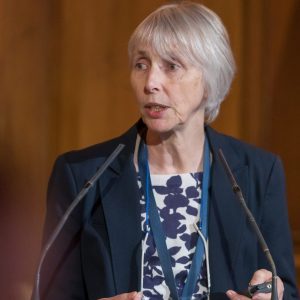
Over many years the Dean group has focused on how plants sense and remember winter. This has taken us into a detailed dissection of the regulation of one gene, FLC, which underpins variation in flowering time and vernalization requirement in many plant species.
Arabidopsis FLC is regulated through a co-transcriptional repression mechanism coupled to Polycomb epigenetic silencing. This mechanism is central to gene regulation, underpinning development throughout eukaryotes. FLC has become an exemplar for how a gene is switched from an active expression state to one that is epigenetically silenced. At FLC, antisense transcription (COOLAIR) and Polycomb silencing function in parallel to confer environmental plasticity. Non-coding SNPs at the locus underpin much of the phenotypic variation for flowering/vernalization and affect different molecular aspects of this mechanism.
Our previous work integrating molecular, genetic, computational and structural analyses, collaboratively with Prof. Martin Howard’s group at JIC, and Drs Mariann Bienz, Julian Sale and Lori Passmore at MRC-LMB, Cambridge, has revealed core mechanistic principles important for epigenetic silencing generally.
Our current work is a close collaboration with the group of Prof. Yiliang Ding at JIC. We are studying in vivo RNA and chromatin structures that influence the co-transcriptional processes needed for the ON/OFF switch to Polycomb silencing.
How transcription delivers epigenetic silencing (youtube.com)
Below are three selected papers including a review, others are available via the ‘Professor Dame Caroline Dean’s publications’ link below.
Selected Publications
-
Whittaker C., Dean C. (2017)The FLC Locus: A Platform for Discoveries in Epigenetics and Adaptation.Annual review of cell and developmental biology (33)Publisher's version: 1081-0706
-
Nielsen M, Menon G, Zhao Y, Mateo-Bonmati E, Wolff P, Zhou S, Howard M, Dean C (2024)COOLAIR and PRC2 function in parallel to silence FLC during vernalizationProceedings of the National Academy of Sciences of the United States of America (121)Publisher's version: 0027-8424
-
Mateo-Bonmatí E, Montez M, Maple R, Fiedler M, Fang X, Saalbach G, Passmore LA, Dean C (2024)A CPF-like phosphatase module links transcription termination to chromatin silencing.Molecular cellPublisher's version: 1097-2765
Opportunities
Postdoctoral Scientists interested in joining the lab are encouraged to send their CV to the Dean lab.