
Flu sends scientists dipping for gold
Researchers on the Norwich Research Park have patented a quick, simple dipstick flu test using sugar labelled with gold
Read the story
Excellence in plant and microbial science
Researchers on the Norwich Research Park have patented a quick, simple dipstick flu test using sugar labelled with gold
Read the story
John Innes Centre scientists have outlined advances in the lab that could translate into pesticide-free protection from disease in the field
Read the story
An international team of scientists has perfected a way of watching genes move within a living plant cell
Read the story
Work undertaken at the John Innes Centre describes new Surface Plasmon Resonance (SPR) protocols to identify and footprint protein-DNA interactions in a cost effective and semi-automated way
Read the story
Tomatoes, said to be the world’s most popular fruit, can be made both better-tasting and longer-lasting thanks to UK research with purple GM varieties. “Working with GM tomatoes that are different to normal fruit only by the addition of a specific compound, allows us to pinpoint exactly how to breed in valuable traits,” said Professor...
Read the story
The enthusiasm of a school biology teacher helped fuel Professor Mervyn Bibb’s own curiosity. Today, as antibiotic resistance nears a crisis point, his work to understand how soil bacteria produce antibiotics is more vital than ever
Read the story
Why do rose petals have rounded ends while their leaves are more pointed?
Read the story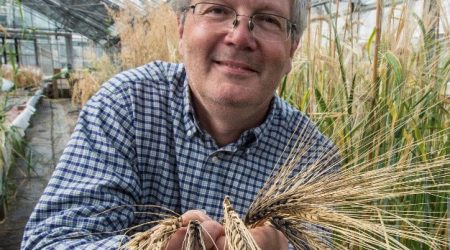
For the first time in nearly a century drinkers will be able to taste beer made from Chevallier, the classic heritage barley from the Victorian period
Read the storyProfessor Enrico Coen from the John Innes Centre has been awarded €2.5M EU funding to explore the growth and evolution of carnivorous plants. “Carnivorous plants turn the normal order of nature upside down, eating animals instead of being eaten by them,” said Karen Lee, a researcher working on the project at the John Innes Centre....
Read the story