Royal Society Faraday Discovery Fellowship awarded to pioneering John Innes Centre researcher
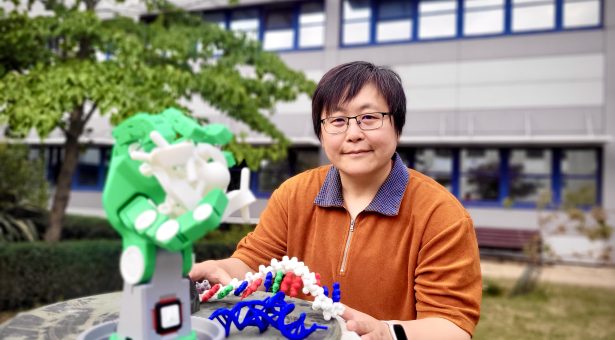
John Innes Centre group leader, Professor Yiliang Ding, has been awarded a prestigious Royal Society Faraday Discovery Fellowship.
Professor Ding is one of seven scientists who have been announced as the first recipients of Faraday Discovery Fellowships, prestigious long-term awards worth £8m over 10 years to support exceptional mid-career research leaders in the UK.
Selected from more than 600 initial applications, the first cohort will investigate fundamental questions, from predicting extreme weather in the face of future climate change to the role of RNA structure in crop resilience.
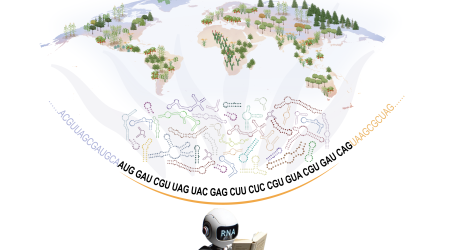
Professor Ding’s research group at the John Innes Centre has made great advances in recent years by developing RNA structure profiling methods and Artificial Intelligence (AI) powered models that can read the sequence and structural codes that make up the “RNA language” of plants. The Royal Society Faraday Discovery Fellowship offers an opportunity to take this innovative research to another level.
“When we launched the first plant RNA foundation model (PlantRNA-FM) last year we said that this is just the beginning. This award demonstrates that the Royal Society shares our ambition,” said Professor Ding.
“We are excited to continue working closely with our collaborator, Dr. Ke Li (University of Exeter), whose group brings world-leading expertise in multi-objective optimisation, decision-making, and artificial intelligence (AI) to decode and encode the RNA language in plants. .
“I am profoundly grateful to my colleagues and collaborators at the John Innes Centre and around the world, whose contributions have been instrumental to our scientific journey. I owe special thanks to my mentor and long-term collaborator, Professor Dame Caroline Dean FRS, for her unwavering support, guidance, and inspiration.”
Faraday Discovery Fellowships are aimed at supporting outstanding mid-career Science, Technology, Engineering and Mathematics (STEM) researchers. The grants also aim to develop a pipeline of future research talent, through mentoring and training opportunities for grant holders and their research groups.
Fellows this year will hold their awards at six institutions: the John Innes Centre, the University of Sheffield, Newcastle University, the University of Oxford, Imperial College London, and University College London.
Sir Adrian Smith, President of the Royal Society, said: “This exciting first cohort of Royal Society Faraday Discovery Fellowship fellows are using cutting-edge techniques to explore questions at the frontiers of human knowledge.
“From the ways in which human, or artificial, intelligence builds understanding of the world, to investigating the atomic-to-atmospheric-scale systems that could unlock new materials, strengthen food security and support our resilience to climate change.
“These 10-year fellowships give researchers space to pursue new knowledge, build their research groups and develop close collaborations around the world that will ensure the UK continues to develop and attract the next generation of scientific talent and bring benefits to the whole country.”
Lord Vallance, UK Science Minister, said: “Turbo-charging our world-class institutions with the very best research talent will be critical to unlocking breakthroughs that could help protect our food chains, put AI to work in the economy, and tackle climate change. That’s why DSIT has backed the Royal Society with £250 million in long-term funding to support the work of mid-career researchers who are at the top of their game.
“These seven talented researchers will only bolster the rich diversity and quality of scientific enquiry that’s happening in the UK. Whether it’s through backing for our homegrown researchers and innovators through our record £22.6 billion commitment to R&D, or through the over £115 million funding we’re using to bring the world’s best research talent here too, we’re determined to see brilliant ideas brought to life, here.”
Professor Dame Caroline Dean FRS, who is Professor Ding’s scientific mentor at the John Innes Centre, said: “I am thrilled that Yiliang’s innovative research has been recognised with such a prestigious fellowship. It demonstrates the truly pioneering nature of her work, and I will be excited to see the discoveries coming from her group over the next decade.”
Like its more familiar counterpart DNA, RNA is a fundamental molecule in all living organisms, carrying genetic information not only through its sequence but also through its intricate structures. RNA consists of nucleotide building blocks arranged in specific patterns, analogous to how letters are assembled into words and sentences in a language.
Professor Ding’s research programme seeks to decode this “RNA language”—to uncover how the sequence and structure of RNA determine its functions in plant cells. By harnessing cutting-edge technologies, the team will span from advancing fundamental understanding of RNA-based gene regulation to pioneering RNA molecular design for both RNA therapeutics and crop improvement. The outcome of this research programme will help position the UK at the forefront of RNA biology and AI-driven biological sciences.