Norwich scientists win international award in bid to solve antibiotic resistance
Norwich Research Park scientists have won a prestigious international award for a breakthrough that could help the fight against antibiotic resistance
Read the story
Excellence in plant and microbial science
Norwich Research Park scientists have won a prestigious international award for a breakthrough that could help the fight against antibiotic resistance
Read the story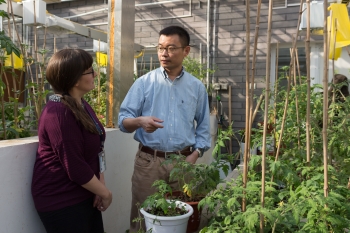
On Wednesday 2 November, the Centre of Excellence for Plant and Microbial Science (CEPAMS), jointly established by China Academy of Sciences (CAS) and John Innes Centre, officially launched in Beijing with its first laboratory open for research
Read the story
Twenty female scientists from universities across India visited the John Innes Centre as part of a workshop aimed at boosting the mid-career development of women in science and agriculture in India
Read the story200 girls from 17 Schools from across Norfolk and Suffolk attended the second Women of the Future conference at the John Innes Centre
Read the story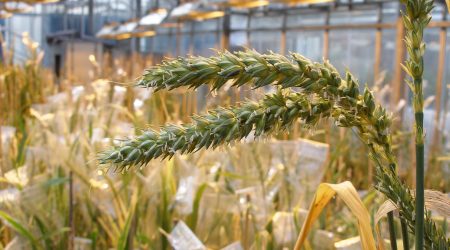
Identifying the gene for an interesting trait that might help you breed better crops isn’t always easy – especially if you’re working with wheat or barley
Read the story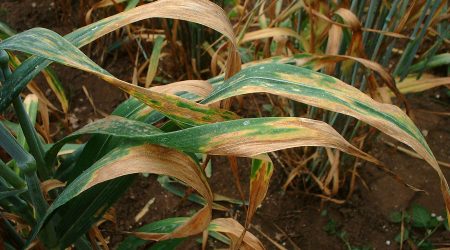
A new paper explains why plant breeders have found it difficult to produce wheat varieties which combine high yield and good resistance to Septoria, a disease in wheat which can cut yield losses by up to 50%
Read the story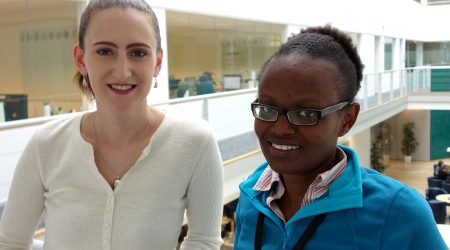
The John Innes Centre is pleased to welcome Dr Rose Kigathi from the Department of Biological Sciences, Pwani University, Kenya, for a nine-month placement as part of her AWARD fellowship
Read the story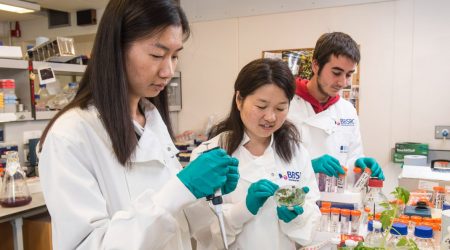
The Centre of Excellence for Plant and Microbial Science (CEPAMS) will be formally opened tomorrow in Shanghai by Jo Johnson MP, the UK Minister of State for Universities, Science, Research and Innovation
Read the story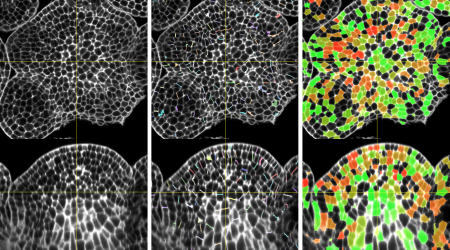
Scientists have pioneered innovative new cell imaging techniques to shed light on cells hidden deep inside the meristem
Read the story