Green Horizons: plant science careers for a food-secure future
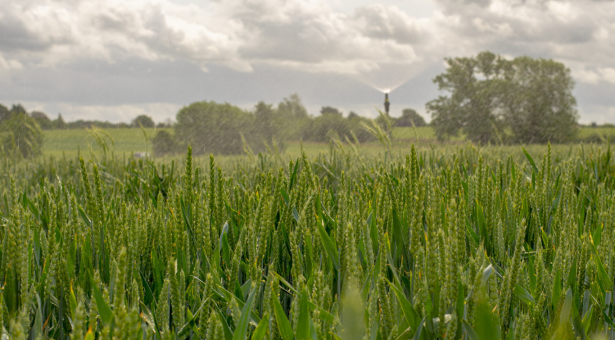
The Delivering Sustainable Wheat (DSW) virtual training course recently returned with renewed energy, under its new name Green Horizons, offering more than 100 students from 19 UK universities a rare opportunity to engage directly with modern plant science.
Designed to connect undergraduates with active researchers, breeders, and industry experts, the programme gave participants a firsthand look at real-world wheat research, breeding strategies, and potential career paths.
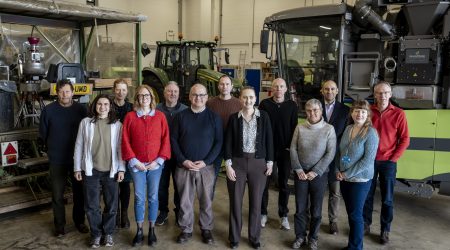
This course was put together by colleagues from across DSW, a UK BBSRC-funded strategic programme that brings together the complementary expertise of eleven leading UK research institutes and universities to advance wheat research, breeding, and sustainability. The course was convened by the John Innes Centre, with sessions chaired by Dr Philippa Borrill (JIC) and Professor Elizabete Carmo-Silva (Lancaster University) with a focus on ‘Plant Science Careers for a Food-Secure Future.’
Bringing plant science to life
For many students, opportunities to interact with researchers outside the classroom are limited. The Green Horizons course bridged that gap, turning textbook concepts into tangible experiences. Participants explored how genetics, physiology, data science, and biotechnology shape the crops that feed the world. They also gained an understanding of the broader mission of plant science: feeding a growing population sustainably while addressing climate and environmental challenges.
Modern tools and real-world impact
Professor Richard Flavell, former Director of the John Innes Centre (1987–1998) and one of the world’s pioneering plant molecular geneticists, guided students through the technological evolution of plant science. Flavell emphasised that scientific discoveries alone are not enough to create impact: “Keeping informed about scientific breakthroughs beyond your own expertise is key to continual growth of the sector. Innovation, coupled with effective business models, is what drives real change,” he said. He encouraged students to embrace emerging technologies such as AI and remain adaptable in a rapidly evolving field.
Dr Susanne Dreisigacker joined live from CIMMYT in Mexico and spoke about how genomic prediction, genome-wide association studies, DNA markers, speed breeding, and phenotyping are transforming wheat breeding worldwide. She highlighted pre-breeding programmes that underpin global improvement and offered a glimpse into the enormous “unseen efforts” behind the wheat on our tables.
Dr Carus John-Bejai of KWS UK shared practical insights from the world of commercial plant breeding. In breakout sessions, students tackled real-world challenges, balancing trait priorities, economic constraints, and environmental factors, while understanding that yield in a changing climate remains a central focus.
Dr Simon Griffiths, JIC Group Leader and DSW programme lead, presented a vision for a second ‘Green Revolution’, showing how gene editing unlocks underutilised genetic diversity for resilient, productive, and sustainable crops. He stressed that translating research into impact requires integrating science, policy, and business strategy.
Inspiring the next generation of plant scientists
Dr Colwyn Thomas, course director of the JIC MSc in Plant Genetics and Crop Improvement, chaired the career insight session, which featured a panel of scientists and breeders sharing practical advice on navigating academia or industry. They described how their careers had been shaped by a mixture of practical trade-offs, research priorities, and entrepreneurial opportunities.
Take-home messages from our career panellists included:
- Make and maintain connections with people along your career journey – you never know when those connections may be useful.
- Postgraduate study isn’t for everybody. Sometimes it’s better to get some work experience before deciding to go back to university.
- Job satisfaction is important, and no career decision is set in stone – try something and, if it doesn’t work out or you don’t like it, try something else!
Dr Rose McNelly, postdoctoral scientist at JIC, said: “Doing a rotation PhD meant I spent time in three different labs before committing to a PhD project. It meant I could try out lots of different techniques and study plants that I otherwise wouldn’t have worked with. I don’t think I would have chosen to work on wheat without having the opportunity to try it first.
“Plant science has opened a lot of doors for me, and I’m really pleased I pursued it after my undergraduate degree. It’s a diverse field to work in, both in terms of the scientific techniques you learn and the people you meet.”
Dr Chris Burt, Cereal Research and Breeding Services Lead at RAGT Seeds UK, said: “Plant breeding is now a very multi-faceted, high-tech industry which requires many specialist skills. If you’re interested in pursuing a career in plant breeding, I would highly recommend seeking out some work experience, either through an internship or summer placement. It’s hard work, but it provides a good insight into the world of plant breeding and particularly field-based operations.”
Dr Petros Sigalas, Technical R&D Advisor at TIMAC AGRO UK, said: “You will meet many people along your career journey who will inspire you, including your teachers, supervisors and mentors. If you find someone who motivates you, keep them close and learn from them, because maintaining those connections can be very useful. I have been lucky to have a few people who have helped me along the way, and I am very grateful.”
Building a community beyond the course
The programme encouraged active learning through small breakout groups, where students discussed topics with plant scientists and solved theoretical and practical problems. To ensure networking continued beyond the course, online platforms were created, including a Teams channel for sharing resources and a LinkedIn networking page, fostering a collaborative community of emerging plant scientists.
Urgency and importance for the future
With the global population projected to approach 10 billion by 2050, humanity faces an unprecedented and urgent challenge: producing more food in the coming decades than has ever been grown in all human history.
Events such as Green Horizons are therefore vital for inspiring the next generation of plant scientists, especially at a time when student interest in the field is declining, and some UK universities are reducing or closing plant science programmes. By connecting students with researchers, breeders, and industry experts, the course helped equip emerging scientists to tackle the challenges of sustainable crop production, climate resilience, and global food security.
The programme reinforced the importance of pairing scientific discovery with real-world impact, showing students both the science and its applications.
Students, early-career researchers, and professionals interested in plant science are encouraged to continue engagement through the Green Horizons LinkedIn community or resources at www.wheatresearch.ac.uk.
Student feedback and testimonials
Since attending the course, students have reflected on what they have learnt. Their knowledge of wheat breeding and its importance has improved, and 88% of the students who attended feel they have a good knowledge of the range of careers available in plant science (up from 18% before they took part). More than 70% of students said they are likely to pursue a career in plant science. Here are some student testimonials:
- “The most useful part of the course for me was gaining further insight into the global impact of food insecurity and learning more about the ways in which the issue is addressed.” A recent Biology graduate from the University of Exeter.
- “I really liked learning about the history and various discoveries of food science, and it made me realise that I might want a future in this.” Second year Medical Science student at Oxford Brookes University.
- “I found the career insight session the most useful. I am currently applying for PhDs, so it was really useful hearing from current PhD students and their route into academia. It was also interesting to hear from people in industry and what other opportunities there are in plant sciences careers.” Fourth year Biology student at the University of Warwick.
- “I especially enjoyed hearing about future challenges in this field, and one of the most useful things for me was hearing from people who had such a wide variety of careers and had taken so many different paths into plant sciences, as previously I was not aware of all of these options. It allowed me to think more about potential career paths that I could take.” Third year Biology student at the University of Oxford.
- “The breakout sessions were the most useful, as they provided an opportunity to chat with professionals in the industry and ask questions about the talk, as well as about their careers and insights.” Second year Biotechnology student from the University of York.
Thank you to the Green Horizons course organisers:
- Mr Roger Berwick, John Innes Centre
- Dr Philippa Borrill, John Innes Centre
- Professor Elizabete Carmo-Silva, Lancaster University
- Dr Simon Griffiths, John Innes Centre
- Dr Carus John-Bejai, KWS
- Dr Michael Pound, University of Nottingham
- Dr Sacha Przewieslik-Allen, University of Bristol
- Dr Colwyn Thomas, John Innes Centre
- Dr Eleri Tudor, John Innes Centre.
The Green Horizons course was organised by the Delivering Sustainable Wheat Institute Strategic Programme, funded by the UKRI Biotechnology and Biological Sciences Research Council (BBSRC) grant number BB/X011003/1.