Credit – wild-type cyanobacterium species (2)
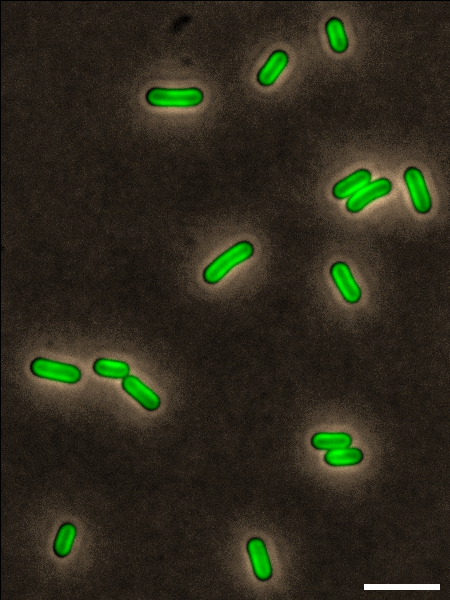
Microscopy image showing cells of the wild-type cyanobacterium species used in the study. Autofluorescence was pseud-coloured as bright green. Scale bar is 5 micrometers.

Excellence in plant and microbial science
Microscopy image showing cells of the wild-type cyanobacterium species used in the study. Autofluorescence was pseud-coloured as bright green. Scale bar is 5 micrometers.

Miguel Gonzalez Sanchez looks back at his unconventional career path to becoming a research software engineer, and the skills he has developed that help support quality science with solid digital infrastructure
Read the story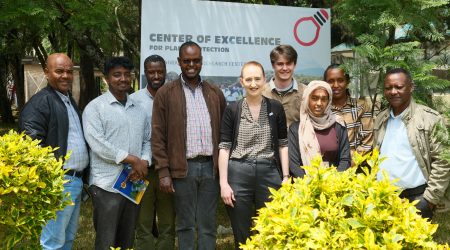
Ethiopian researchers are using a new diagnostic test created by John Innes Centre researchers to identify wheat blast, a growing wheat disease threat. The system provides a simple test that can confirm within just 90 minutes whether the infected material contains wheat blast, a devastating disease that spreads on the wind and can cause up to 100% losses in severe outbreaks
Read the story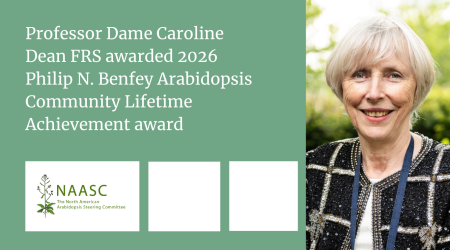
Professor Dame Caroline Dean FRS has been given a lifetime achievement award by the international Arabidopsis research community
Read the story