Innovative Neurodiversity e-learning now available
The John Innes Centre has launched Neurodiversity e-learning resources that are now available to anyone.
By popular demand, an introduction to Neurodiversity, and a module designed to help managers support Neurodiverse teams and individuals, are available at: www.jic.link/elearning
Dr Clare Stevenson, Head of Science Coordination and Research Culture at the John Innes Centre, said: “We’ve seen what a huge impact this e-learning has had on our colleagues at JIC and across other BBSRC institutes. By making it available for anyone who wants to learn more about Neurodiversity we hope that others can benefit in the same way.”
Created in a STEM (Science, Technology, Engineering and Maths) environment, many of the examples and case studies reflect the importance of Neurodiversity in these sectors and workplaces, however the core messages and learning are relevant to all disciplines.
The Neurodiversity e-learning is suitable for institutes, educational organisations, businesses and workplaces who would like to make their workplace more Neuroinclusive, and for anyone who wants to learn more about Neurodiversity.
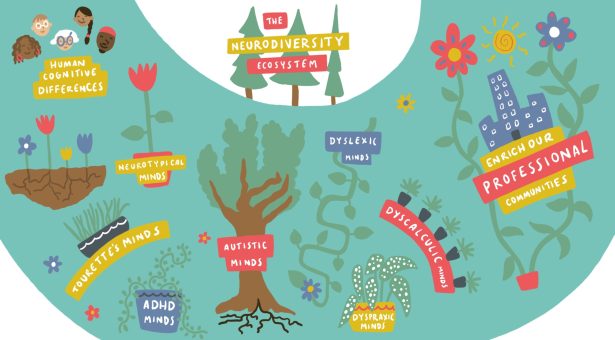
Neurodiversity describes the naturally occurring differences between human brains. Whilst there is a huge range within that diversity, there are commonly occurring ‘neurotypes’ which tend to share certain traits. About 80% of people are ‘neurotypical’ and 20% are thought to be ‘neurodivergent’ in one or more ways.
Professor Graham Moore FRS, Director of the John Innes Centre, said: “Dyslexia has given me my strengths, including strategic thinking and visualisation, and they have shaped my career. Just as biodiversity enriches our ecosystems, Neurodiversity brings unique perspectives and innovative approaches that help drive scientific advancement and innovation in many sectors, both in the UK and worldwide.”
Funded by the Biotechnology and Biological Sciences Research Council (BBSRC), this e-learning was developed and delivered by Leah Milner-Campbell, Neurodiversity project officer, in collaboration with staff and students from the Norwich Research Park.
To date, over 600 people have engaged with the e-learning, with participants from across the UK including from every BBSRC-supported research institute. Participants reported a 34.5% increase in understanding Neurodiversity, and a 33% boost in confidence when discussing Neurodiversity after completing the course.
To access the e-learning a fee of £10 is payable for each training session, to cover the costs of maintaining and updating the resource. All income will be reinvested into further research culture initiatives.
Dr Stevenson concluded: “The creation of this resource was only possible by the enthusiasm, skills and diversity of the team involved. We would particularly like to thank all the staff and students at our institute, and across the BBSRC institutes, that were involved. Also, I want to personally thank Leah Milner-Campbell who worked at the institute as Neurodiversity project officer to deliver this year long project and create this impactful resource.”
For any enquires about the project, collaborative access or bulk purchasing options please contact Dr Clare Stevenson at jic.neurodiversity@jic.ac.uk.
If you work or study at a BBSRC strategically supported institute, you can continue to access these resources. Please contact your local EDI lead for information.
Image credit: Illustration by Anna Rickards