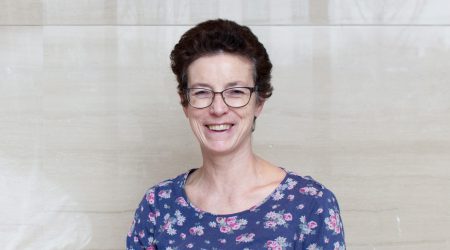
Professor Anne Osbourn joins Calyxt scientific advisory board
Professor Anne Osbourn has been appointed to the scientific advisory board of the US plant-based technology company Calyxt
Read the story
Excellence in plant and microbial science
Professor Anne Osbourn has been appointed to the scientific advisory board of the US plant-based technology company Calyxt
Read the story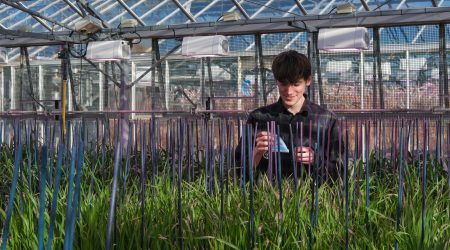
Josh Waites in the new co-Chair of our PhD community; the PhD Voice. We asked Josh about his own PhD project and how a global pandemic has affected the PhD community more broadly
Read the story
Earlier this month we launched the Norwich Institute for Sustainable Development, a cross-Norwich Research Park collaboration focusing on food security and sustainability. We sat down with Dr Peter Emmrich and Dr Natasha Grist to ask them about the new institute and how they got involved
Read the story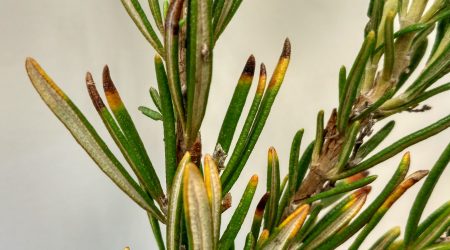
The BRIGIT consortium have designated the first week of March 2021 as 'Xylella Awareness Week'
Read the story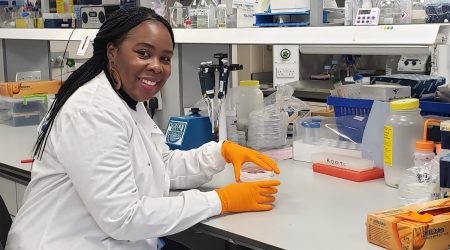
Dr Carol Ibe is a Postdoctoral Scientist in Dr Diane Saunders lab, working on yellow rust in wheat. We asked Carol, what is yellow rust, why is it a problem and what can we do to save our daily bread?
Read the story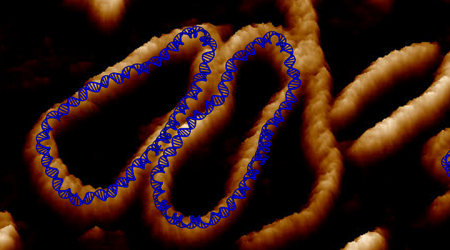
Scientists have developed ground-breaking techniques for visualising the stresses and strains placed on tiny twisted DNA circles
Read the story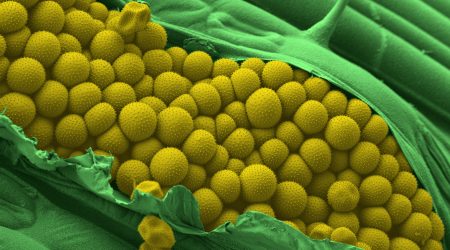
Researchers have found a gene in wheat that acts to promote rust fungal infection. Disrupting the function of this gene provides resistance to two of the most economically damaging diseases of wheat worldwide - yellow and stem rust
Read the story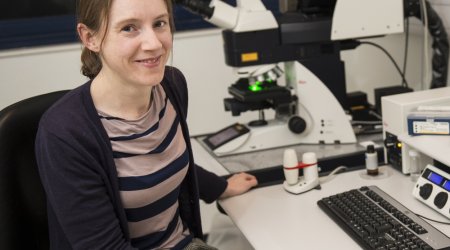
Late last year the Journal of Cell Science interviewed Dr Christine Faulkner as part of their 'cell scientist to watch' series. Here is the Journal's interview with Christine, covering her career path, current research, challenges and the best advice she's been given
Read the story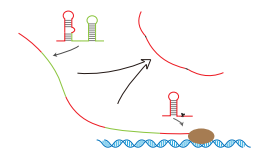
A question puzzling molecular biologists concerns how mRNA processing sites are precisely recognised; particularly how are they distinguished from surrounding sites with similar sequence content?
Read the story