Seven ingredients for a Neuroinclusive research organisation
A year ago, I wrote a blog titled “Unlocking JIC’s Neurodiversity” announcing an ambitious project to understand, value and celebrate Neurodiversity across our research community. We had modest targets: 200 people accessing focussed Neurodiversity e-learning, 20 people attending face-to-face training, and delivering training at five locations across BBSRC institutes.
Today, the numbers tell a remarkable story: over 600 people have engaged with our bespoke e-learning platform so far, more than 170 people have participated in face-to-face Neurodiversity training across seven BBSRC institutes, and we’ve catalysed network development, policy conversations, and commercial interest from universities across the UK and beyond.
But the real success lies in the individual stories we have heard along the way; one parent wrote: “What an eye opener, this project has helped me understand my struggles at work and also how my little girl may need help too.” Another colleague reflected: “This course made me realise that I too am Neurodivergent!” A manager shared: “I’m now much more mindful about things that I think are just easy, or common sense to me.”
What made this transformation possible? Reflecting on our journey at the John Innes Centre, I’ve identified seven essential ingredients that any research organisation needs to build genuine Neuroinclusive culture.
1. Leadership vision and commitment
Neurodiversity inclusion requires leaders who recognise its strategic importance and commit resources accordingly. Without senior-level championing, initiatives remain marginalised and vulnerable to competing priorities.
JIC’s foundations were laid through our Accessibility Advocates group who organised awareness sessions from 2022 onwards. These efforts gained momentum when Professor Graham Moore FRS wrote a powerful blog about his dyslexia experience in January 2024, inspiring others to engage more seriously.
Building on this foundation, Dr Clare Stevenson, Head of Science Coordination and Research Culture, crafted a comprehensive vision which secured BBSRC Connecting Culture funding, and created the annual diversity lecture with support from the John Innes Foundation. Clare’s leadership extended beyond funding alone, as she continues to champion the project at every level.
2. Dedicated specialist expertise
Organisations need specialised expertise and dedicated resources to embark on an effective Neuroinclusion journey. It is difficult to solely do this work in-house. Neurodivergent staff, who are likely to know the most, are not experts in Neuroinclusion just because of their own identity – and put themselves at risk when they speak out for change.
Bringing in specialised Neurodiversity expertise proved transformational for JIC. Our project also highlights what is possible when an organisation invests in dedicated capacity. This enabled us to develop bespoke, high-quality resources rather than purchasing generic corporate training, reaching over 600 people through e-learning and more than 170 people through face-to-face training—numbers impossible with external providers due to cost constraints. Feedback consistently highlighted the value of research-specific content that resonated with participants’ daily experiences.
If your organisation is interested in starting a similar journey, see the end of this blog for some ideas of how you could get started, taking advantage of the same resources that were created by the John Innes Centre in this project.
3. Authentic community voices
Research organisations are Neurodiverse by nature, with approximately 20% of the population being Neurodivergent—a figure likely higher in scientific workplaces. However, these voices often remain unheard in organisational inclusion discussions. Engaging authentic community voices requires psychological safety and recognition that Neurodivergent colleagues are experts on their own experiences.
The heart of our success lay in the 24 JIC colleagues who shared their lived experiences and diverse perspectives for our e-learning platform. From PhD students to senior scientists, these individuals brought authenticity that no external provider could replicate. As one participant reflected: “It is so much more useful having interviews with actual people giving examples, than just hearing a vague corporate overview!”
Their willingness to be vulnerable gave others permission to explore their own experiences and ask important questions about inclusion and support.
4. Bespoke, context-relevant approaches
Every sector has its own culture, and Neurodiversity inclusion must be tailored accordingly. Research workplaces are particularly unique, with distinctive challenges around physical environment, management expertise, high-pressure deadlines and turnover/tenure patterns.
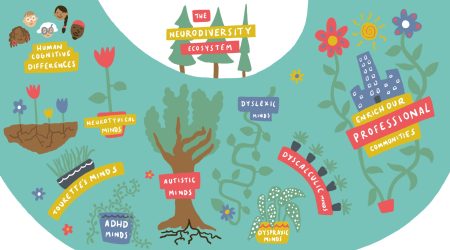
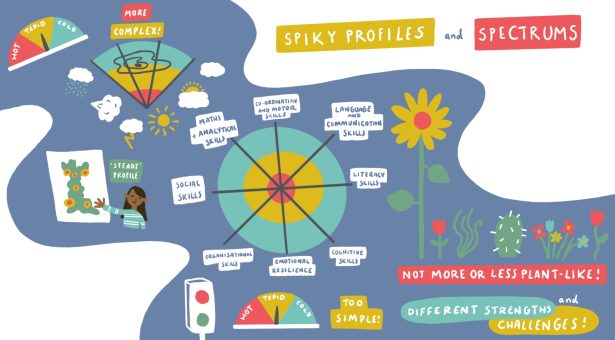
Our training used plant ecology analogies to explain neurological differences, referenced lab conditions for sensory needs, and addressed academic management realities. Participants noted how “the course relates to the plant science workplace—it’s insightful and relatable” and appreciated “the comparisons to plants, that really helped cement the learning.”
Generic corporate training cannot capture these nuances that make inclusion relevant and actionable for research communities.
5. Cross-institute collaboration
Neurodiversity inclusion benefits from collaborative approaches enabling knowledge sharing, resource pooling, and collective learning. Individual organisations often lack resources to develop comprehensive support independently.
The project was designed for collaboration across BBSRC institutes, creating shared resources adaptable across different contexts. This enabled institutes to access specialist training in a more cost-effective way, whilst we gathered valuable feedback from all participants to continuously improve our materials.
We’ve seen encouraging organic network development, with initiatives like the “Neurodiversity Nook” emerging at Quadram Institute Bioscience. Whilst building formal networks remains a future aspiration, these developments suggest a strong appetite for continued collaboration.
6. Sustained investment and ongoing development
Many research institutions treat Neurodiversity as a one-off intervention rather than recognising it as needing ongoing organisational commitment. Becoming truly Neuroinclusive requires sustained, institution-wide transformation. Training is an important foundation, but Neuroinclusive cultures require ongoing policy development, management capability building, and continuous learning.
Research funders play a crucial role. BBSRC’s Connecting Culture fund provided resources to unlock dedicated capacity and external validation for prioritising this work. Funders have unique influence to drive sector-wide change, particularly for institutions needing encouragement to begin their Neurodiversity journey.
We built infrastructure for ongoing development: resources, champions programmes, networks, and e-learning secured until 2026 for BBSRC institutes.
7. A community that cares enough to unlearn
True inclusion requires cultural transformation, and communities that care enough to challenge assumptions and change behaviours. Individuals must be open to acknowledging that their own understanding might be incomplete, and their practices potentially exclusionary.
In this year-long project, the most profound transformation seemed to happen in colleagues for whom Neurodiversity wasn’t initially on their radar. One participant captured this, stating: “I over-estimated my understanding of Neurodiversity before taking the course. I thought I knew, but I really didn’t.” Another reflected: “I realised that I was also falling victim to some of the misconceptions that people have about Neurodiversity.”
This willingness to unlearn, and reflect, happens when people recognise that inclusion enables everyone to thrive and contribute their best work.
What’s next?
As our Connecting Culture project concludes, we’re excited to announce that our Neurodiversity training is now available for everyone to access.
This is a community-focused initiative, not a commercial one. A small fee for individuals will help us cover costs and ensure the training can be maintained, updated, and expanded with new modules.
All income will be reinvested into further research culture initiatives.
If you work or study at a BBSRC strategically supported institute, you can continue to access these resources. Please contact your local EDI lead for information.
For organisations interested in a collaborative approach, please contact us directly: jic.neurodiverity@jic.ac.uk
We believe the research sector has a unique opportunity to lead in Neurodiversity inclusion, as our communities already attract Neurodivergent talent and value intellectual diversity. We look forward to continuing this journey with you.
Closing reflections from Leah Milner-Campbell
While I am proud of my own role in delivering this project, our success truly reflects our entire community’s contributions. BBSRC’s Connecting Culture fund provided essential foundation demonstrating how strategic funder investment can unlock extraordinary transformation. We encourage other research funders to consider similar support for EDI initiatives.
Clare Stevenson’s visionary leadership made everything possible. Our communications team brought expertise to every campaign. The colleagues who shared their stories created the authentic foundation for our training.
Most importantly, every colleague across the BBSRC network who engaged with training, challenged assumptions, or opened their mind to learning contributed to this transformation. Change happens when communities care enough to grow together.
A year ago, we set out to unlock JIC’s Neurodiversity. What we discovered is that unlocking potential isn’t just about removing barriers. It’s about creating cultures where difference is genuinely understood, valued, and celebrated.
To work collaboratively with the John Innes Centre please contact Dr Clare Stevenson: jic.neurodiverity@jic.ac.
If you’d like to contact Leah, who delivered this successful Neurodiversity project, you can find out more about her at https://inclusivestrengths.co.uk/science or contact Leah directly at leah@inclusivestrengths.co.uk to discuss your specific needs.