
A snapshot of our recent research featured in scientific journals
Fundamental discovery could revolutionise fertiliser use in farming
A new biological mechanism has been found that makes plant roots more welcoming to beneficial soil microbes.
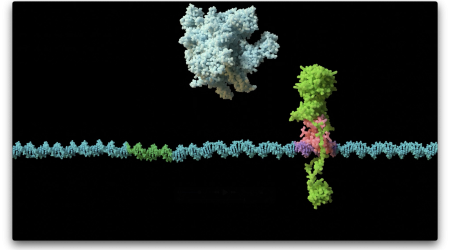
The mutation was found in a Medicago truncatula gene that reprogrammes the legume’s signalling capacity, benefitting partnerships with nitrogen-fixing bacteria and the phosphorussupplying arbuscular mycorrhiza fungi (AMF). Our researchers showed that this same gene mutation created in a calcium signalling pathway enhances endosymbiosis in farming conditions, and in wheat in the field.
“Our findings hold great potential for advancing sustainable agriculture. This mutation offers opportunities for sustainable crop production using endosymbionts, alongside reduced inorganic fertiliser use,” said Dr Myriam Charpentier, group leader.
Spores of Ceratopteris richardii, the model fern used in the study. Credit: Phil Carella
Evolutionary study reveals the toxic reach of disease-causing bacteria across the Plant Kingdom
New analysis has revealed the widespread capacity of bacteria to spread disease across the Plant Kingdom.
Researchers analysed syringomycin produced by Pseudomonas syringae and compared its effect on non-flowering and flowering species, to determine how the pathogen infects distantly related plants.
The researchers hypothesise that P. syringae virulence affects shared fundamental processes, with syringomycin likely interfering with cell membranes.
“Each of the plant species studied has a different life history since they shared a common ancestor 500 million years ago. However, a single group of pathogens can infect them using a common set of factors. Our results demonstrate that pathogen virulence may be more general across plants than previously believed,” concluded Dr Phil Carella, group leader.
Dr Eleni Vikeli, John Innes Centre research assistant, GRU Pisum collection curator and paper co-author, phenotyping the 700 Pisum Diversity panel in our glasshouses
Mendel-inspired breakthrough could transform global pea farming
An international research collaboration has mapped the diversity of the globally important JIC pea collection, revealing secrets behind the traits Gregor Mendel made famous 160 years ago.
A pea diversity panel, containing approximately 700 genebank accessions, was selected, deep-sequenced, and extensively characterised for over 70 traits, to generate a global pea genomic and phenotypic map. These resources enable unprecedented opportunities for research and breeding.
The researchers used this new knowledge to identity three previously unknown ‘famous genes’ controlling traits used by Mendel for his experiments that led to the foundation of Genetics, as well as reveal new variations of previously characterised genes.
Dr Noam Chayut, Germplasm Resource Unit team leader and a co-corresponding author, said: “This study shines a light on Mendel’s fundamental discoveries, and provides the means to accelerate pea improvement. It could lead to growing more and better varieties of pea across the UK and the world.”
Yellow and red Mimulus cardinalis. Credit: Dr Katie Wenzell, formerly of the Byers lab
Why bumbling bees prefer yellow flowers to red
Researchers have revisited decades-old studies into the unusual, yellow-flowered populations of Mimulus cardinalis and Mimulus verbenaceus, which are usually red and pollinated by hummingbirds.
“By understanding how traits evolve in the wild, we understand biodiversity better, and by understanding how these traits can be affected by plant genetics, we have the foundation of the ability to engineer traits to impact pollinator preference and thus crop yield,” said Dr Kelsey Byers, group leader.
Using modern resources in controlled lab environments, the team showed that bumblebees (which use scent to forage) were twice as likely to visit the yellow flowers, with both yellow types having increased scent emission compared to their red counterparts.
However, the bees were ill-fitted to the flowers, causing damage and inefficient pollen transfer, suggesting the yellow flowers represent an early stage in the evolutionary transition from hummingbird to bee pollination.
Research could herald an epigenetic era in crop breeding
Epigenetic variation, like genetic variation, can be inherited and influence traits across generations. However, epigenetic variation does not involve changes to the genetic sequence that makes up DNA.
Previous studies have shown that the MET1-1 gene is important to DNA methylation, a heritable epigenetic process in plants, but this has been difficult to study as knocking out MET1-1 results in the plants dying.
To solve this, researchers turned to wheat’s complex genome. Using mutagenesis, they knocked out only some copies of the gene, resulting in partial epigenetic mutants. These showed altered DNA methylation with interesting traits applicable to climate resilient plant breeding.
“These were the first epigenetic mutants in wheat,” observed Dr Philippa Borrill, group leader. “Our study demonstrated that the complicated wheat genome, so often an obstacle, can be beneficial.”
Associated Scientists


Publications
- Autoactive CNGC15 enhances root endosymbiosis in legume and wheat. (2025) Nature
- A necrotizing toxin enables Pseudomonas syringae infection across evolutionarily divergent plants. (2025) Cell host & microbe
- Genomic and genetic insights into Mendel’s pea genes. (2025) Nature
- Within-species floral evolution reveals convergence in adaptive walks during incipient pollinator shift (2024)
- Partial redundancy buffers deleterious effects of mutating DNA methyltransferase 1-1 (MET1-1) in polyploid wheat. (2025) Journal of experimental botany
Share