
While we are known for our excellent fundamental science, we are also a catalyst for growth and commercial collaboration
QuberTech
Creating a sustainable method for producing natural rubber, QuberTech is an early-stage spin-in currently incubating at the John Innes Centre.
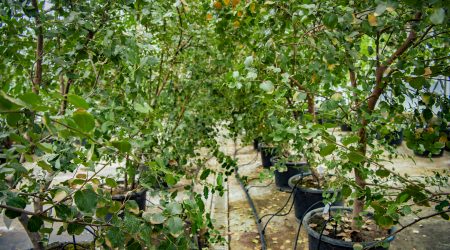
Taraxacum kok-saghyz (TKS) dandelions produce high-quality natural rubber in their roots, but not at commercially viable levels. QuberTech is looking to change this, by combining TKS dandelions with advanced aeroponic cultivation systems to create the world’s first precision-bred rubber crop. The aim is to facilitate a sustainable UK-based supply of this valuable global commodity, which is currently at risk due to climate change and supply chain vulnerabilities.
Being based at our institute allows QuberTech access to expertise, lab space and our cutting-edge platforms. This initial relationship has also enabled QuberTech to secure a collaborative grant with JIC and LettUs Grow, allowing further and closer collaboration.
Dr. Barbara Radzikowska, Senior Scientist, using a LCMS machine to analyse HotHouse samples
HotHouse Therapeutics
The world urgently needs faster, smarter and more sustainable ways to discover new therapeutic medicines.
Born from the John Innes Centre’s science, HotHouse Therapeutics was spun out of Professor Anne Osbourn OBE FRS NAS‘s lab and uses plant bioengineering, guided by Al, to tum plants into sustainable bio-factories. This technology enables the creation of novel molecules, including next-generation adjuvants, that could transform future vaccine products.
As a later stage spin-out company, its science is advancing a plant bioengineering platform to lead the way for environmentally friendly and sustainable biotechnology companies creating therapeutics. The company estimates its system could unlock over 20 million novel molecules from across the plant kingdom.
This is a wonderful example of how the John Innes Centre’s discovery science can be translated into real world applications. HotHouse Therapeutics is based on site at the institute, ensuring continued support for research and development and providing employment opportunities for local talent.
A grass pea field trial at Church Farm
Traditional Norfolk Poultry
Working in partnership with Traditional Norfolk Poultry, scientists at the John Innes Centre have been assessing the suitability of grass pea as a poultry diet constituent.
Grass pea offers the potential to reduce the poultry industry’s reliance on imported soya, in favour of a drought-resilient, flood-tolerant crop that can be grown in the UK. This could bring huge economic and environmental benefits.
By linking an agricultural and environmental need with JIC research programmes, there is potential for large scale impact. This research is now being carried forward with ADOPT Round 2 Innovate UK funding.
Associated Scientists


Share