
Plant Genetics and Crop Improvement (MSc)

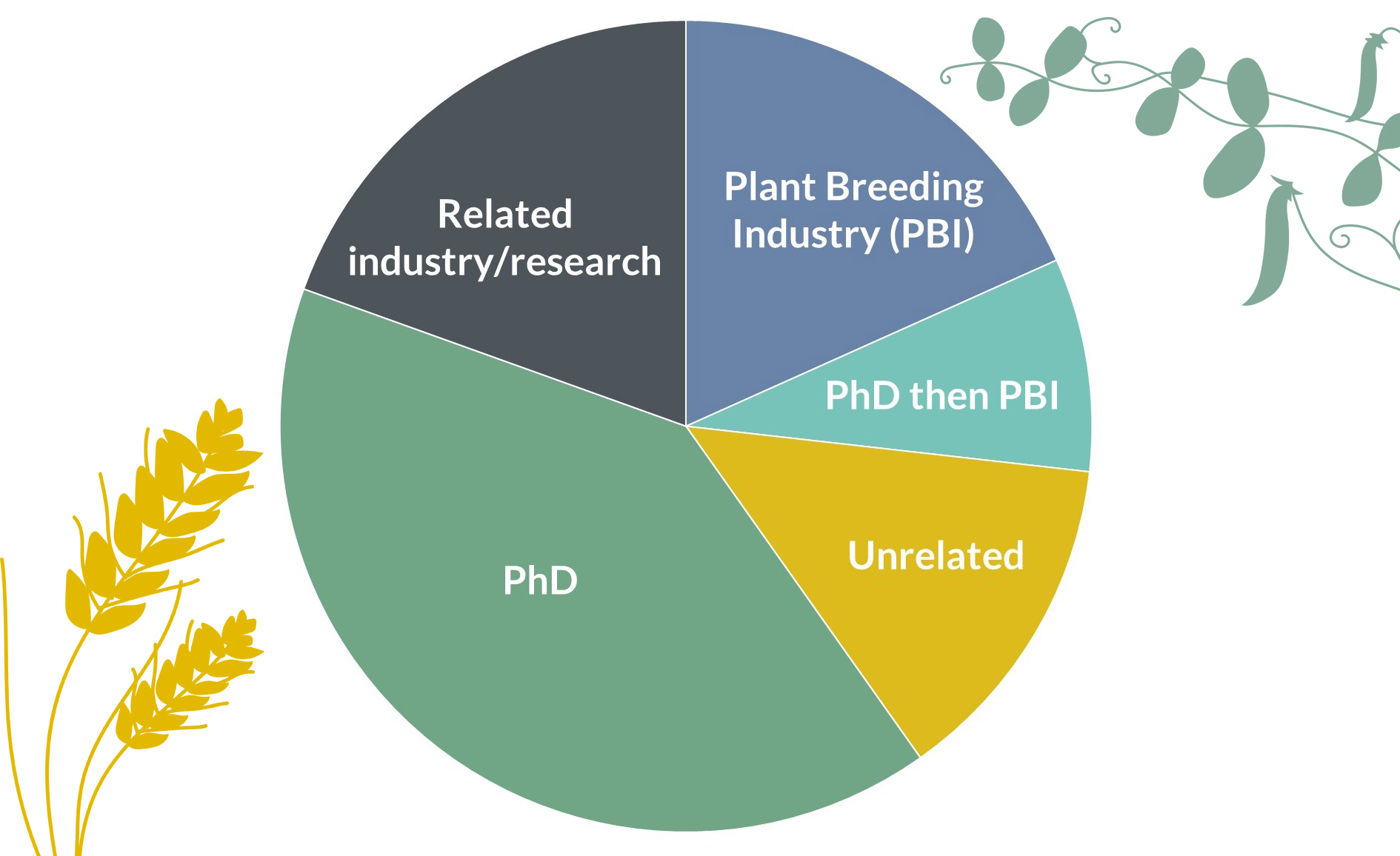
Our Plant Genetics and Crop Improvement (MSc) offers one MSc, two career paths; a one-year course which provides training for students wishing to undertake a PhD in plant genetics and related subjects, or to pursue a career in the plant breeding industry. In recent years our graduates have been successful in securing PhD placements at research institutes across the Norwich Research Park and beyond, or alternatively, employment within the plant breeding industry (see Figure below for student data from 2010-2018).
A recent graduate of the Plant Genetics and Crop Improvement MSc, Theresa Cassandra Saini, has been awarded a John Innes Foundation-funded Nuffield International Farming scholarship.
Click here to apply for Autumn 2026 entry
This one-year Postgraduate Taught programme focuses on plant genetics and related disciplines together with their applications to crop improvement in the 21st century.
In addition to studying the component taught modules, you will undertake a six-month laboratory-based research project under the supervision of a Senior Scientist at the John Innes Centre, Earlham Institute or The Sainsbury Laboratory.
The MSc degree is awarded by the University of East Anglia but the course is delivered from John Innes Centre along with our partners at the Norwich Institute for Sustainable Development with significant input from the UK plant breeding industry. Our students enjoy the same access to student services and support at JIC and other UEA student support services, but with the advantage of unique real-workplace experience from the start of the degree.
Course Overview:
Open to UK, EU and International applicants. Course intake is in late September each year.
Duration: one year, full-time or two years part-time.
Entry requirements: Bachelor’s Degree 2:1 or equivalent in Biological Sciences, Genetics or Plant Biology.
For more information on references and English language proficiency requirements, click here.
Component Modules:
- Plant Genetics, Bioinformatics and Biotechnology
- Target Traits for Crop Improvement
- Sustainable Food Systems
- Practical Skills in Plant Molecular Genetics
- Plant Breeding and Statistics
- Research Project Plan
- Laboratory Research Project.
All student applications to the MSc course are made through the following link: Find out more about academic structure, content of the programme and how to apply.
Tuition fees for the Academic Year 2026/27:
- UK Students: £14,450 (full time; includes bench fee). We also offer a limited number of UK student scholarships of between £6,000 to £8,000 to eligible students. For more information please visit the UEA MSc website.
- International Students: we are pleased to announce that for the academic year 2026-27 self-funded international students will qualify for a John Innes Centre MSc Scholarship. These scholarships will be awarded in the form of a tuition fee discount; eligible students will pay a tuition fee of £15,000 instead of the normal international student rate of £28,250.
If you choose to study part-time, the fee per annum will be half the annual fee for that year, or a pro-rata fee for the module credit you are taking (only available for Home students).
We estimate living expenses at c.£1,200 per month.
Testimonials
“This is the perfect gateway for people who want to pursue a PhD and stay in academia or find a job in the industry. Back in 2009, this was the slogan I saw at the end of brochure in welcome package that was posted to me to Nepal. And I can confidently tell anyone joining this course that you won’t get disappointed.” Sujit Hari Tha Shrestha, Senior Plant Breeder, CN Seeds Ltd.
“I have very good memories of the MSc (…) The John Innes Centre is a vibrant research centre with good collaboration between labs. The content covered in the programme was very relevant to UK breeding and prepared me well for an industry job.” Gabriella Everett, Assistant Barley Breeder, KWS UK
“The John Innes Centre has been key to my career progression, developing my research skills in a supportive environment and the wider crop genetics perspective. The collaborative projects I worked on allowed me to get to know people within the plant breeding industry.” Dr. Christopher Burt, Cereal Genotyping Manager, RAGT Seeds