Dr Hassan Salem to lead independent research group on plant-insect interactions
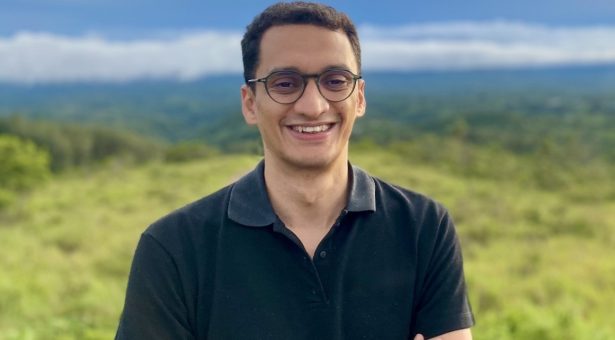
Following an international search, we are delighted to announce that Dr Hassan Salem will be joining the John Innes Centre in early 2026. He will be one of the first academics to be supported by the Global Talent Fund to move to the UK, as mentioned during the UKRI Innovation for Growth summit in London today (24th November 2025).
Dr Salem will be joining the institute from the Max Planck Institute for Biology in Germany, and will lead research on plant-insect interactions. His research focuses on how animals such as beetles, sap-feeding bugs, and their associated microorganisms, influence plant functions. This can include insect-transmitted pathogens, plant immunity and development.
Dr Salem said: “The intimate symbiotic partnerships between insects and the microbes they carry is a vital and fascinating area of research, and the John Innes Centre offers a unique environment for combining expertise in plant biology, microbial metabolism, and genetics.
“The institute’s world-class capabilities in genetics, metabolomics, and biochemical analysis will support me and my team to dissect how microbial partners contribute to plant digestion and to the evolutionary success of their insect hosts at a cellular level, and I can’t wait to start.”
Insects don’t just ‘eat’ crops; they can also spread disease. Between 20% and 40% of global crop production is lost annually due to plant diseases and pests, and it has been estimated that, unchecked, these losses could cost up to $540 billion every year for the global economy.
With estimates that the world will also need 50 percent more food by 2050 to feed the increasing global population, understanding the biological mechanisms behind the relationships of insects and plants could help support world food security.
Professor Cristóbal Uauy, Director of the John Innes Centre, said: “We are thrilled that Dr Salem will be joining us in the new year. His extensive research expertise and innovative science will inspire new collaborations, and lead to exciting new frontiers in this key area of research. I know he will be welcomed by our collaborative community, and am proud that we continue to attract ambitious, visionary researchers to join us in Norwich.”
Dr Salem is also keen to develop the skills and passions of the next generation of researchers. He said: “It is a privilege to support students and early-career researchers to develop technical and intellectual breadth, and to guide them to turn their curiosity into discovery through experimentation. Seeing them build confidence and creativity as they learn and apply different techniques is very rewarding.”
Cristóbal added: “The research that Dr Salem and his group will be exploring is crucial to furthering our fundamental understanding of plant-insect interactions, and is an example of top-quality science that underpins real-world solutions – congratulations to Dr Salem on his appointment.”
Notes
- Dr Hassan Salem is due to start at the John Innes Centre in February 2026.
- He will be joining as a tenured group leader.
- Dr Salem’s recruitment and relocation is being supported by the Global Talent Fund.
- The new £54 million Global Talent Fund is a five-year programme funded by the Department for Science, Innovation and Technology (DSIT), designed to attract around 10 top researchers and their teams to the UK this financial year, and more in future, working in sectors like life sciences and digital technologies.
- This dedicated funding will cover researchers’ relocation costs, allow them to set up a presence within the UK and provide them with ongoing research funding, so that their work can take place in UK universities, businesses, and research organisations.
- Born in Cairo, Egypt, Hassan joins the John Innes Centre after leading a Max Planck Research Group in Tübingen, Germany. He previously held research fellowships at the Smithsonian Institution, Emory University, and the Institute for Advanced Study in Berlin. He is an awardee of an ERC Consolidator Grant (2025) and the EMBO Young Investigator Award (2023).
- Dr Salem’s appointment coincides with an exciting new appointment at The Sainsbury Laboratory, of Dr Aileen Berasategui.