
Dr Hassan Salem
Group Leader Advancing Plant Health (APH), Harnessing Biosynthesis for Sustainable Food and Health (HBio)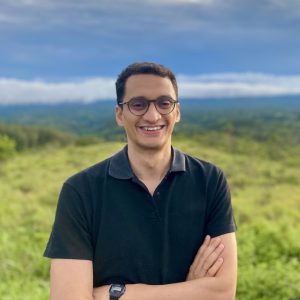
Our research asks how microbial symbionts enable herbivory in insects.
Many herbivorous insects depend on microbes to digest components of plant cell walls and to obtain essential nutrients. We study the molecular and biochemical mechanisms that underpin these partnerships, with a focus on leaf-feeding beetles that rely on specialised endosymbionts.
Research
We take a mechanistic approach to understanding insect-microbe symbiosis.
Digestive function
We investigate how symbiotic bacteria degrade complex plant polymers such as pectin. Some of these microbes have highly reduced genomes but retain specialised enzymatic pathways. We examine how these pathways function, how they are regulated, and how metabolic roles are divided between host and symbiont.
Metabolic exchange
Symbionts can provide vitamins and other metabolites that insects cannot synthesise. We study how these exchanges are integrated into host physiology and how disruption of these pathways affects insect development and fitness.
Transmission and stability
Obligate symbioses require reliable transmission across generations. We investigate how extracellular symbionts colonise developing insects, how specificity is maintained, and how long-term host–microbe associations evolve.
Relevance
Insect-associated microbes can influence herbivore performance, plant damage and, in some cases, plant disease dynamics. By defining the mechanisms that sustain these interactions, we aim to better understand how microbial partnerships shape plant-insect ecology.
Background
Before joining the John Innes Centre, we established an independent research programme at the Max Planck Institute for Biology in Tübingen. Earlier positions included the Smithsonian National Museum of Natural History, the Institute for Advanced Study – Wissenschaftskolleg zu Berlin, and Emory University.