Data harvesting down on the experimental farm
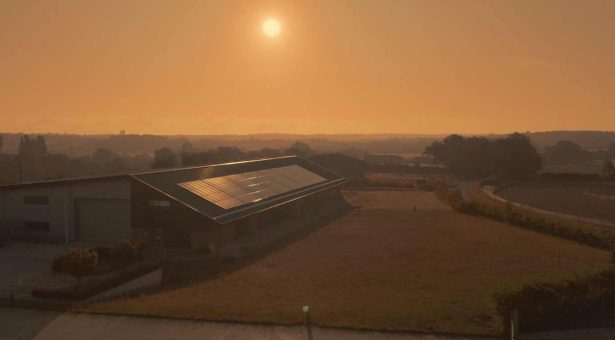
The 2025 harvest at the John Innes Centre’s field trials and experimental farm was the earliest on recent record, befitting a pattern of extreme weather variation caused by climate change.
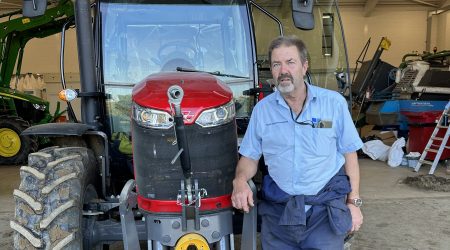
The exceptionally dry summer has brought harvest challenges for UK farmers seeking maximum yields for their hard work; and it’s been the same for John Innes Centre staff down at Church Farm, says manager of the field experimentation team Darryl Playford.
“We started combining our wheat on July 25 and finished on August 9 which is the earliest ever. It is part of a climate pattern – within the last five years we have had three of the most extreme harvests, both late and early. This fits the wider climate picture of more unpredictable, varied weather developments,” he said.
Addressing the challenges of extreme, unpredictable weather events is one of the key motivations of John Innes Centre researchers as they seek to find useful genetic variation to make crops more climate resilient, able to withstand the dry conditions of summer 2025 or the exceptionally wet summer of 2021.
The field trials facility based at Church Farm, Bawburgh, includes the Dorothea de Winton Field Station, and is a key piece in this mission – providing a vital link from lab to glasshouse to the field, where experimental plants containing the latest genetic discoveries are tested in a real farming environment.
The field experiments are organised into plots, which vary from one square meter to a quarter of a hectare.
Over the two weeks of the 2025 harvest the John Innes Centre team worked long hours harvesting: 6,379 plots, 5,600 of which were wheat.
The smallest experiment this year covered just two plots while the largest individual experiment covered 750 plots. The total number of field experiments this year was 79. Of these 13 were for external customers who use the John Innes Centre facility to test innovations and bulk up seed quantities. The remaining 66 were field experiments for researchers based at Norwich Research Park, including the John Innes Centre, Quadram Institute and Earlham Institute.
Just over 1,900 plots were hand harvested, containing legume crops such as peas, lentils, and Phaseolus bean.
The remainder was harvested by combine, using two bespoke machines packed with technology which can harvest crops and data at the same time.
These vehicles are described by Dr Simon Griffiths, who leads the Delivering Sustainable Wheat programme, at the John Innes Centre as “the ultimate phenotyping machines” – with the on-board computer software capable of collecting data for a host of traits including seed weight, straw weight, and nutritional quality of seeds.
For each plot the combine cuts, the scientist gets a read out of plot weight, grain moisture, specific weight and grain protein via NIR (an infrared spectrometer which scans the grain as it goes past). For oilseed rape it gives oil content.
Each of the nearly 7,000 plots are harvested into bags of seeds – some of which will go for further analysis and others toward next years’ experiments. Seeds are kept at the field station’s storage facilities or at the Germplasm Resources Unit, a national gene bank facility hosted at the John Innes Centre, and available for researchers and commercial partners worldwide.
“This data harvest distinguishes John Innes Centre’s task from that of farmers,” says Darryl.
“We are the same as farmers in that the harvest is the culmination of a year’s work. The difference is that for farmers it is very much about income and how much grain ends up in the barn.
“For us we are as much harvesting data as grain or seed. Collecting good robust data is what we do because it informs the scientists whether the traits of interest they are working on in glasshouse experiments are working in the field.”
When all the work is done it is a relief for the team who have been watching the weather for weeks. Even then there is little time to rest on their laurels.
They expect to be drilling wheat for the 2026 harvest at the start of October. For oilseed rape the drilling starts at the end of August.
This year’s harvest team were, in addition to Darryl: Rebecca Lee, Rich Samworth, Ewan Holmes, Charlie Philp, Amy Foster and Melody Ham.
“It’s hats off to them,” says Darryl. “This is very much a team effort. The research staff will send thanks to me, but the plaudits are shared, I am just a small cog in the machine.”