
Professor Cathie Martin
Group Leader Fellow of the Royal Society Harnessing Biosynthesis for Sustainable Food and Health (HBio)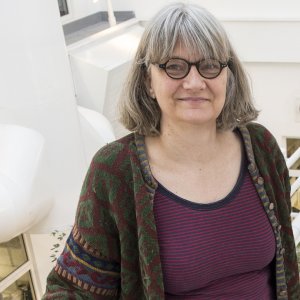
Cathie’s research interests lie in using plant science to improve human diet and health.
She is particularly interested in biofortification and using plant metabolic engineering to enhance foods nutritionally.
Much of Cathie’s work has been undertaken in tomatoes, enriching their nutrient content with, for example, resveratrol and anthocyanin.
Cathie collaborates to test these enhanced foods in intervention studies and also undertakes studies into how these modified fruits have improved shelf-life and reduced susceptibility to grey mould, Botrytis cinerea.
- Biofortification of fruit and vegetables for human health
- Metabolic engineering to enhance phytonutrients such as anthocyanins and resveratrol
- Improving the shelf-life of fruit and vegetables
Cathie and her group have recently been co-ordinating research into the relationship between diet and health, and how crops can be fortified to improve diets and address the global challenge of escalating chronic disease. This work has involved linking leading clinical and epidemiological researchers with plant breeders and metabolic engineers to develop scientific understanding of how diet can help to maintain health, lead to healthy ageing and reduce the risk of chronic disease.
This has included research into plants which contain natural chemical compounds, some of which are seen as ‘natural medicines.’ Cathie is particularly interested in phenolic compounds present in fruit and vegetables which are considered to be the main ‘active ingredients’ of many ‘super foods’ and ‘super drinks’.
Cathie’s fundamental research has also focused on cellular specialisation and she was the first to identify genes regulating cell shaping in plants. She is currently investigating how specially shaped cells adapt plants to their environment.
Cathie is also interested in cellular specialisation in flowers (colour and cell shape) and how these traits are used by different plants for pollinator attraction.
She has also been involved in developing genetic screens to identify crops which lack toxins that cause nutritional diseases such as konzo and neurolathyrism.
Because, science is an international undertaking and as such, Prof Cathie Martin’s lab take a number of field trips. You can view photos from her recent trips here.
Selected Publications
-
Li J, Martin C, Fernie A (2024)Biofortification’s contribution to mitigating micronutrient deficiencies.Nature foodPublisher's version: 2662-1355
-
Edwards A, Njaci I, Sarkar A, Jiang Z, Kaithakottil GG, Moore C, Cheema J, Stevenson CEM, Rejzek M, Novák P, Vigouroux M, Vickers M, Wouters RHM, Paajanen P, Steuernagel B, Moore JD, Higgins J, Swarbreck D, Martens S, Kim CY, Weng JK, Mundree S, Kilian B, Kumar S, Loose M, Yant L, Macas J, Wang TL, Martin C, Emmrich PMF (2023)Genomics and biochemical analyses reveal a metabolon key to ß-L-ODAP biosynthesis in Lathyrus sativus.Nature communications (https://doi.org/10.1038/s41467-023-36503-2)Publisher's version: 2041-1723
-
Li J, Scarano A, Gonzalez NM, D'Orso F, Yue Y, Nemeth K, Saalbach G, Hill L, Martins C, Moran R, Santino A, Martin C (2022)Biofortified tomatoes provide a new route to vitamin D sufficiencyNature PlantsPublisher's version: 2055-0278
Opportunities
Enquiries to join the group from interested postgraduate and postdoctoral scientists are always welcomed.
Fellowship and PhD studentship positions can potentially be funded by the BBSRC, EU or John Innes Centre.