Insight: Through the Microscope
Issue #38; Summer 2025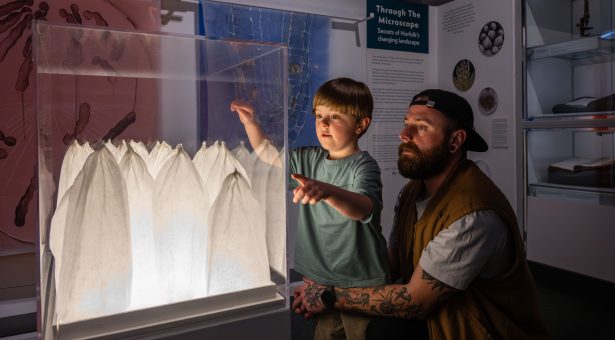
This photo captures the moment a family engages with an eye-catching artwork, in the ‘Through the Microscope: Secrets of Norfolk’s changing landscape with Edible East’ exhibition at Gressenhall Farm and Workhouse.
Inspired by 2025 being the 400th anniversary of the use of the term ‘microscope’, this exhibition is free with admission and part of a residency until Sunday, 2 November 2025. It is supported by the John Innes Centre and The Centre for Microbial Interactions, Norwich, and funded by Arts Council England.
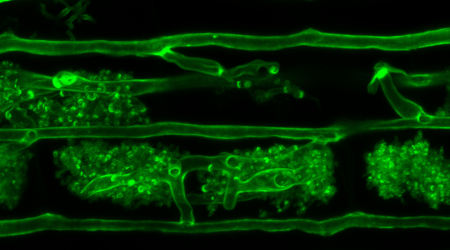
From microscopic fungi that support life in the soil, to single-celled algae that overwhelm freshwater ecosystems, artists Tara Sampy and Jennie Pedley have responded to a range of historic and contemporary material provided by scientists, archivists and imaging specialists offering a visual and playful exploration of our relationship with the natural world.
For this piece, Tara was inspired by visits to the John Innes Centre and the bags used to limit the pollination of plants. The shape of her piece also reflects microscope images of adaxial cells on flower petals, viewed by the artist.
Credit: Norfolk Museums Service