You are here: Home ::
Significant Events in the history of the John Innes (1909-2009)
View the 100 year history of the JIC from the early days in London at Merton Park to our role in the development of the Norwich Research Park in the 21st Century.
1829 – John Innes born in Hampstead, London
1859 – Charles Darwin publishes On the origin of species
1861– William Bateson born at Whitby in Yorkshire
1864 – John and James Innes form the City of London Real Property Co Ltd. A property bought by John Innes at ‘Lower Merton’, Surrey. John Innes later re-names it ‘Merton Park’
1866 – Gregor Mendel published on the inheritance of characters in garden peas
1882 – Death of Charles Darwin
1894 – Materials for the study of variation published by W Bateson. It was a manifesto for the theory of ‘discontinuity’ in the origin of species
1900 – Rediscovery of Mendel’s papers and ‘laws of inheritance’. W Bateson, at Cambridge, became an energetic champion of Mendelism
1902 – Mendel’s principles of heredity – a defence published by W Bateson, containing translations of Mendel’s papers
1904 – John Innes died. Left money and land at Merton Park in Surrey to found a ‘public museum’ or a ‘school of horticulture‘ to ‘carry out investigation and research whether of a scientific or practical nature, into the growth of trees and plants generally’. The Board (later Ministry) of Agriculture pushed for a horticultural research station, especially for research in fruit-breeding
1905 – W Bateson coined the term ‘genetics’
1909 – Scheme of the Charity Commissioners for the administration of the John Innes Horticultural Institution, dated 12 January 1909. Sir David Prain asked by Board of Agriculture for advice on role of Institution; urged need for research station on plant genetics and invited W Bateson to be director.
W Bateson FRS, Professor of Biology, Cambridge, accepted directorship in November
1910 – The John Innes Horticultural Institution opened. Bateson’s directorship started on 1 January 1910 and the Bateson family moved into the Manor House at Merton Park in August. Bateson and Reginald Crundall Punnett founded the Journal of Genetics
1911 – Student gardener scheme begins. Under the provisions of the Charity Commissioners JIHI offers direct horticultural training to a small annual intake of students
1912 – Plant Breeding Institute founded in Cambridge as part of Cambridge University’s School of Agriculture. Under its first Director Rowland Biffen the Institute was seeking to demonstrate that Mendelian laws of inheritance could be applied to characters of economic importance. The early work of the PBI was entirely devoted to the breeding of improved varieties of wheat and was chiefly concerned with improvements in grain quality. Biffen was an early recruit to Mendelian genetics and had been a member of Bateson’s circle at Cambridge
1913-14 Russian plant breeder Nikolai Vavilov joined the JIHI as a ‘Visiting Researcher’ to work with W Bateson. While there he published a paper on ‘immunity to fungous diseases as a physiological test in genetics and systematics’, one of the main lines his work was to follow. In 1921 Vavilov was picked by Lenin to head the Branch of Applied Botany at Petrograd (St Petersburg) which became the headquarters of the All-Union Institute of Plant Breeding, a world centre in plant selection and genetics. Vavilov set up more than 400 plant research institutes and experimental stations
1914-18 World War I interrupted the work of JIHI as staff leave to serve in the armed forces or in munitions work. Space not required for experiments was re-allocated to growing seedling vegetables which were distributed free to local allotment-holders
1915 – Muriel Wheldale, JIHI’s first scientific student (1911-14), published The Anthocyanin pigments of plants, a pioneering study that combined plant breeding experiments with biochemical investigation of flower pigments
1916 – Caroline Pellew and Florence Durham publish on the genetic behaviour of Primula kewensis (a hybrid of P. verticillata and P. floribunda). Their work confirmed P. kewensis to be an amphidiploid (a hybrid between species, initially sterile, but in which a doubling of chromosome numbers has restored fertility)
1919 – W Bateson and E R (Becky) Saunders formed the Genetical Society. The first meeting was held in Cambridge on 12 July 1919
1921 – W Bateson visited Thomas Hunt Morgan in New York and was partly converted to the chromosome theory of heredity. He then promoted the study of cytology at JIHI by the appointment of W C F (Frank) Newton and later (1923) Cyril Dean Darlington
1922 – Meeting of the Genetical Society at JIHI in June. T H Morgan and Alfred Henry Sturtevant of Columbia University, New York, demonstrated the brilliant work of the American Drosophila (fruit fly) school of genetics
1926 – W Bateson died suddenly at the age of 64 on 8 February
1927 – Sir Alfred Daniel Hall appointed director. John Burdon Sanderson Haldane joined staff as part-time head of genetical research and developed the application of mathematical theory to genetics. Dorothy Cayley, JIHI mycologist, showed ‘breaking’ in tulips caused by a transmissible virus. Biochemical research introduced
1928 – Summer courses in cytology and genetics launched at JIHI. These two-week summer courses were held biennially until World War II and were initiated to fill a gap in higher education in cytology and genetics training. They were usually attended by 30 to 45 undergraduate and postgraduate students from Britain and overseas
1929 – W C F Newton and C Pellew’s classic study on the amphidiploid origin of Primula kewensis published. P. kewensis became famous as an observed instance of speciation by polyploidization. C D Darlington published on polyploidy and formulated ‘Darlington’s rule’: that there is a negative correlation between the fertility of the polyploid and that of the diploid from which it arose. This rule became the basis for the study of fertility in species, hybrids and diploids and polyploids
1929-30 – Rose Scott-Moncrieff (appointed at instigation of J B S Haldane) begins work on the chemistry of anthocyanins using plants of ‘known genetical composition, in order to determine the precise nature of the change produced by a factor’. Scott-Moncrieff contributed significantly to the development of biochemical genetics
1930 – The first ‘John Innes’ fruit variety released. A tetraploid blackberry bred by JIHI was distributed to commercial fruit growers and went on general sale in 1934. This was the first of 53 new fruit varieties released by JIHI over the next five decades
1930s onwards – Morley Benjamin Crane, Dan Lewis and associates elucidated the genetically controlled incompatibility mechanism in plants and its practical application to economic crops, especially fruit. M B Crane and Gavin Brown used plant breeding techniques to create new fruit varieties
1930 – 1950 – C D Darlington elucidated cytological mechanisms and developed the cytogenetic concept. In the 1930s Darlington’s work focused on the movements, divisions and pairing of the chromosomes preceding and during the formation of germ-cells. His book Recent advances in Cytology (1932) had a major impact on the development of cytology and genetics.
1931– C D Darlington had fifteen people studying under him, the largest cytological school of its kind in the world
1930s onwards – L F (Len) La Cour develops new cytological techniques. His experiments yield important improvements in pre-treatment, fixation, embedding and staining of material. Before his work cytological methods, all using light microscopy, were only just satisfactory for ‘easy’ species with low numbers of large chromosomes. His improvements helped reveal the inner structure and coiling of the chromosomes
1931 – JIHI affiliated to the University of London for post-graduate research and higher degrees. Kenneth Mather joined on a three-year Ministry of Agriculture scholarship to study genetics and cytology. His work included a study of chromosome changes induced by X-rays with L H A Stone. Mather was the first affiliated student from JIHI to be awarded a PhD (1933)
1934 – Research on composts began. William Lawrence started to investigate the whole procedure of making seed and potting composts following a major disaster in 1933 with Primula sinensis seedlings, an important experimental plant for JIHI geneticists. After hundreds of trials, Lawrence and John Newell arrived at two basic composts, a base fertiliser for use in the potting compost and a standard feed. The formulae of these, as yet unnamed composts were published in 1938. The name ‘John Innes Compost’ was allotted in 1938-39; the horticultural retail trade in the composts made ‘John Innes’ a household name, but JIHI received no financial benefit from them
1935 – First grant obtained from Ministry of Agriculture (for fruit research)
1937 – Formal departments founded at JIHI for the first time. The four new departments were: Genetics, Cytology, Pomology and Biochemistry
1939 – Retirement of A D Hall. C D Darlington appointed Director
1939 – 1945 – World War II. About half the land at JIHI was transferred from experimental to economic crops and research was re-directed towards the immediate problems of food production in war. John Innes leaflets on composts, soil sterilization, seed production and fertility rules for fruit-planting were produced and distributed as part of the war effort
1940 – 1948 – K Mather and Lambert Wigan, developed statistical approaches to genetic analysis. Mather developed theory of polygenic inheritance for quantitative characters. His book Biometrical Genetics (1949) marked his rise to prominence as one of the most distinguished geneticists of his time
1944 – JIHI suffers direct hit in flying bomb offensive on August 20th
1945 – Bayfordbury estate in Hertfordshire purchased by John Innes Trustees. The purchase included a mansion, farm buildings, stables, cottages and 372 acres of land
1946 – JIHI became a grant-aided station of the Ministry of Agriculture. The initial maintenance grant was £16,000 per year
1947 – C D Darlington and Ronald Aylmer Fisher founded Heredity: An International Journal of Genetics. The JIHI’s Student Gardener scheme for advanced horticultural training ends
1948 - Angus Bateman studied promiscuity in fruit flies and formulated what later became known as ‘Bateman’s principle’ in behavioural biology.
National Rose Species Collection was founded at JIHI
Lt Col James (Jimmy) Innes joined the Trustees of the John Innes Foundation
1948 – 1949 – JIHI moved from Merton to Bayfordbury. The main removal took place between 22 August and 18 October 1949
1949 - The Fruit, the Seed and the Soil published, an edited collection of JIHI leaflets (the first in this numbered series was published in 1940). C D Darlington and K Mather’s The Elements of Genetics published: the first major textbook on genetics to be published after the war
1950 – The JIHI officially opens at its new site in Bayfordbury on 2 June
1951 – First Bateson lecture given by Professor R A Fisher to mark 25 years since W Bateson’s death
MM series of rootstocks launched: a series of woolly aphid-resistant apple root-stocks raised jointly by JIHI and East Malling Research Station. They make a major contribution around the globe to minimising losses in orchards due to pest damage
1953 – Structure of DNA proposed by Watson & Crick.
Resignation of C D Darlington on his appointment as professor of botany at University of Oxford
1954 – Dr Kenneth S Dodds appointed Director and potato genetics began.
JIHI’s departments re-organized. The departments were now Genetics; Plant Breeding; Physiology and Plant Culture, and a new Department of Cell Biology was planned (formerly the departments were Genetics, Pomology, Garden Research, and Cytology)
1955 - Dan Lewis was elected FRS in recognition of his pioneer work on the genetics of incompatibility in flowering plants
1956 – Agricultural Research Council (ARC) became responsible for the JIHI’s grant-in-aid
1957 – First electron microscope arrived at JIHI
1959 – Completion of new Cell Biology building
1960 – JIHI renamed the John Innes Institute to better encapsulate the plant, microbial and mammalian cell research in progress.
John Innes Jubilee celebrations on 8 July
1961 – Lt Col James (Jimmy) Innes became Chairman of John Innes Foundation (until 1990)
1963 – John Fincham and Peter Day published the first edition of their highly successful textbook Fungal Genetics
1965 – Unit of Nitrogen Fixation founded by the ARC at University of Sussex, Brighton, directed by Joseph Chatt
1966 – Resignation of K S Dodds
1967 – John Innes Institute moved from Bayfordbury to Norwich to form an association with the School of Biological Sciences at University of East Anglia. Dr Roy Markham appointed Director; his ARC Virus Research Unit, Cambridge amalgamated with JII and most of it temporarily housed at the neighbouring Food Research Institute. The arrival of VRU staff nearly doubled the number of scientific and experimental officers at JII (to around 40)
Ralph Riley at PBI, Cambridge, was elected FRS for distinguished cytogenetic work in the Triticinae, especially his work identifying the Ph gene which controls pairing between the nearly identical chromosomes of wheat and wild relatives of wheat and ensures that bread wheat (an amphidiploid with genomes derived from the wild progenitor of wheat and two grasses) behaves as a fully fertile diploid. His discovery allowed the first "genetic engineering" in plants, permitting useful genes (for example, disease resistances) to be transferred into wheat from wild species
1968 – Appointment of Dr David Hopwood as Head of Genetics, who moved from the University of Glasgow with a small group working on Streptomyces
1969 – Dr D Hopwood’s group publish first evidence for a fertility system controlling mating in Streptomyces
1970 – A new virology department established. JII now had four departments: Applied Genetics, Genetics, Virus Research, and Ultrastructural Studies
1970s – The first registered ‘semi-leafless’ pea varieties produced from research and breeding work at JII. The improved crop productivity and standing ability led to the use of ‘semi-leafless’ worldwide
1972 - First John Innes Symposium on the ‘Generation of Subcellular Structures’
1974 - Second John Innes Symposium on ‘Modification of the Information Content of Plant Cells’, chosen for its current interest and ‘controversial nature’
1978 – ARC initiated a programme, involving several Institutes, designed to exploit advances in genetic manipulation techniques in the development of new varieties of crop plants and microorganisms of agricultural relevance
Gavin Brown was awarded the Veitch Memorial Gold Medal of the Royal Horticultural Society for his services to horticulture, particularly for his work in breeding fruit and flowering plants
1979 – Professor R Markham died in November. Professor D. Roy Davies appointed Acting Director
Professor D Hopwood was elected FRS in recognition of his pioneering genetic studies of streptomycetes, the soil bacteria that produce the great majority of medically- and agriculturally-important antibiotics
1980 – Professor Harold W Woolhouse appointed Director
John R Postgate became Director of ARC Unit of Nitrogen Fixation (Sussex) following J Chatt’s retirement
1982 – Head of Department of Ultrastructural Studies, Professor R W (Bob) Horne, retired in December; was succeeded by Dr Keith Roberts who established a new Department of Cell Biology in 1983
1983 - First edition of The Molecular Biology of the Cell, co-edited by Dr Keith Roberts, published. This became the leading cell biology textbook, lauded as ‘the most influential cell biology textbook of its time’ (5th edition, 2008)
1985 – Agricultural and Food Research Council’s Forward Policy proposed that its research institutes should be re-organised into eight ‘super’ institutes
The John Innes Streptomyces group described production of the first hybrid antibiotic by genetic engineering
1987 – Plant Breeding Institute at Cambridge saw its applied research programmes, farm site and National Seed Development Corporation sold to a private company (Unilever) under the government’s privatisation policy. The non-privatised part of PBI was moved from Cambridge to Norwich and integrated into the AFRC’s new Institute of Plant Science Research (IPSR), which also included the John Innes Institute and the re-named Nitrogen Fixation Laboratory, which remained at Sussex
The NFL’s director J R Postgate retired and was succeeded by Barry Smith.
Professor Woolhouse resigned as Director of JII to become Director of the IPSR; Richard Flavell, PBI plant molecular biologist, was appointed Director of JII
The Sainsbury Laboratory was founded for research on molecular plant pathology, through the foresight of Sir David Sainsbury and the generosity of the Gatsby Charitable Foundation, a Sainsbury Family Charitable Trust. Dr Mike Daniels moved from the JII Genetics Department to be first head of the Sainsbury Laboratory with Drs David Baulcombe and Jonathan Jones as the other two founding senior scientists
1989 – Formal opening of The Sainsbury Laboratory, occupying new buildings on the IPSR campus
1990 – Majority of PBI’s scientific staff re-located to newly built facilities at IPSR where they formed the ‘Cambridge Laboratory’ under Dr Colin Law
1992 – AFRC confirmed the move of AFRC Nitrogen Fixation Laboratory to Colney
1993 – Dr Mike D Gale succeeded Dr C Law as Head of Cambridge Laboratory
1994 – Merger of John Innes Institute, Cambridge Laboratory and Nitrogen Fixation Laboratory to form the new John Innes Centre. Professor R Flavell became first director of JIC
Dr K Roberts established the first ‘Teacher Scientist Network’ in the UK, supported by The Gatsby Foundation with space provided by JIC
BBSRC was established by Royal Charter by incorporation of the former AFRC with the biotechnology and biological sciences programmes of the former Science and Engineering Research Council (SERC)
Professor D Hopwood made Knight Bachelor in the Queen’s Birthday Honours for ‘services to genetics’
1995 – Members of Nitrogen Fixation Laboratory staff moved to Colney
The Joseph Chatt Building and the conference centre complex were formally opened in October
Professor M D Gale’s research on cereal genome structure revealed conservation in gene order (synteny) in all cereal species, enabling a step-change in breeding strategies and the cloning of genes from these species
Professor Keith Chater elected FRS for his work demonstrating how the ability of streptomycetes to produce antibiotics is connected to unusual features of their growth
1996 – Professor M D Gale elected FRS in recognition of his discovery that the organisation of genes in grasses, including the major crops, rice, maize and wheat, is so conserved that predictions can be made from one crop to another
1998 – Professor R Flavell elected FRS for his research and leadership in plant molecular genetics. He was among the first to investigate plant genomes at the level of DNA sequence
Professor R Flavell resigned on joining the biotechnology company Ceres in California, USA; Professor M D Gale appointed acting Director of JIC
Royal Society awards Professor M D Gale and Graham Moore the prestigious Darwin Medal in recognition of their research on cereal genetics
Professor Enrico Coen elected FRS for his outstanding research into how flowers are formed. Amongst other important genes that control flowering, he discovered the genes that switch growing shoots to produce flowers
A £1.3 million controlled environment facility opened. The new facility is important to several of JIC’s main research programmes, including work on rice and studies on the sensitivity of plants to day-length
1999 – Professor Chris Lamb appointed Director
Dr Nick Harberd’s team identified and isolated the dwarfing gene that was central to the ‘Green Revolution’ through their research on synteny and the model plant species, Arabidopsis
Professor E Coen’s team solved 250 year mystery of peloric or ‘monster’ flowers in toadflax (Linaria vulgaris). They showed that the abnormal toadflax flowers are caused by a naturally occurring mutation of a single gene that controls flower symmetry
An international research group of over 200 scientists, from 35 laboratories, published the complete DNA sequence for chromosomes 2 and 4 of the tiny weed Arabidopsis thaliana (thale cress), two of this plant’s five chromosomes. Professor Mike Bevan oversaw the co-ordination of chromosome 4 sequencing work
Professor Ray Dixon elected FRS for his major contributions to understanding the genetic basis of nitrogen fixation. He created the first ‘engineered’ nitrogen-fixing microbe
2000 – Dr Caroline Dean’s team identified and isolated a plant gene (FRIGIDA) that controls whether or not a plant needs a winter period before it will flower
2001 – Professor David Baulcombe of The Sainsbury Laboratory elected FRS for his outstanding contribution to the inter-related areas of plant virology, gene silencing and disease resistance
Professor E Coen elected member of USA’s National Academy of Science; only 18 scientists worldwide and from all branches of science are elected as Foreign Associates each year
2002 – Professor Sir D Hopwood’s group together with the Wellcome Trust Sanger Institute, Cambridge, publish the complete genome sequence of Streptomyces coelicolor, a member of the group of soil-inhabiting microbes that are the source of over half of the antibiotics in current use and many other drugs. Their achievement features on the cover of the international science journal Nature
Major departmental restructuring implemented including the creation of two new research departments in Biological Chemistry and Molecular Microbiology. This brought JIC’s departments to six, the other departments being Crop Genetics, Cell and Developmental Biology, Metabolic Biology, and Disease and Stress Biology
Genome Centre established – housing the John Innes Centre Genome Laboratory and the Norwich Bio-Incubator
2003 – Professor Sir D Hopwood was awarded the first Ernst Chain Prize. The prize is for a career scientist who has made an original and substantive contribution in any field of science which has furthered, or is likely to further, understanding or management of human disease
2004 – Professor C Dean elected FRS (and awarded OBE) for her outstanding contributions in the study of developmental timing in plants. Her work revealing the mechanism by which plants remember they have experienced winter demonstrated novel RNA processing mechanisms controlling flowering. Dean’s pivotal role in the development of Arabidopsis as a model for plant genetics was also recognized
2005 - Merger of appropriate administration and support services of JIC with those of the neighbouring Institute of Food Research announced
2006 – Dr G Moore’s group at JIC sequenced a gene complex that controls how chromosomes pair (Ph1). A major advance in wheat genetics, this knowledge could allow breeders to cross commercially grown varieties with wild varieties to give increased tolerance to drought and other desirable characteristics
Professor Phil Dale (plant genetics) and Dr Alison Smith (plant biochemistry) were both awarded OBEs
2007 – Professor K Roberts awarded OBE in recognition of services to cell biology and to science communication
Computational and Systems Biology Department founded
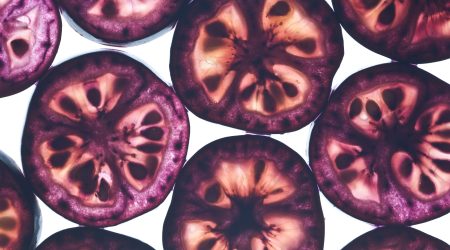
2008 – Professor Cathie Martin’s group expressed genes from snapdragon in tomatoes to grow purple tomatoes high in health-protecting anthocyanins. Sue Bunnewell and Andrew Davis’s image of the tomatoes was selected by Nature as one of the ‘Images of the Year’
Fifth edition of The Molecular Biology of the Cell (co-editor Professor K Roberts) published. This book has now been read by over 1 million people
Bioimaging team moves into purpose-built facility with a new Transmission Electron Microscope
Professor Chris Lamb elected FRS for his major contributions to our understanding of the molecular basis of plant defence
Professor C Dean, OBE, FRS elected member of USA’s National Academy of Science
2009 – Mike Bevan appointed acting Director following the unexpected death of Professor Chris Lamb