
Professor Dame Caroline Dean
Group Leader Royal Society Professor Building Robustness in Crops (BRiC)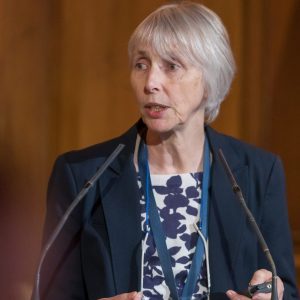
The Dean lab focuses on how plants sense and remember winter.
The group started with three quite different questions:
- Why do some plants overwinter before flowering?
- How do plants remember cold exposure?
- How do flowering mechanisms adapt to different winters?
Their genetic and molecular experiments addressing these questions converged onto how one gene is regulated. This has led them into a detailed dissection of chromatin and antisense RNA regulation of the floral repressor FLOWERING LOCUS C (FLC).
The lab’s activities currently focus on:
- Quantitative variation in FLC expression – This influences whether a plant overwinters before flowering and is through an antisense-linked chromatin mechanism
- Epigenetic switching – Plants remember they have experienced winter in a process called vernalization. This is an epigenetic silencing of FLC expression through a cis-based, Polycomb switching mechanism
- Natural variation – Arabidopsis thaliana adaptation to different latitudes has involved noncoding polymorphisms within FLC that confer natural variation in flowering and vernalization response
Below are three selected reviews – all the primary papers are available via the ‘Professor Dame Caroline Dean’s publications’ link below.
Selected Publications
-
Berry S., Dean C. (2015)Environmental perception and epigenetic memory: mechanistic insight through FLC.Plant Journal (10.1111/tpj.12869)Publisher's version: 0960-7412
-
Whittaker C., Dean C. (2017)The FLC Locus: A Platform for Discoveries in Epigenetics and Adaptation.Annual review of cell and developmental biology (33)Publisher's version: 1081-0706
-
Wu Z., Fang X., Zhu D., Dean C. (2020)Autonomous pathway: FLOWERING LOCUS C repression through an antisense-mediated chromatin silencing pathwayPlant Physiology (182)
Opportunities
Postdoctoral Scientists interested in joining the lab are encouraged to send their CV to the Dean lab.