Summer Schools in Applied Molecular Microbiology
John Innes/Rudjer Bošković
Summer Schools in Applied Molecular Microbiology

Second John Innes-Rudjer Bošković summer school in Applied Molecular Microbiology builds on success of the first

The first in this new series of summer schools was held in 2007 at the Mediterranean Institute for Life Sciences (MedILS) in Split. An account of the origin of the series and of last year’s course can be found here (http://www.jic.ac.uk/science/molmicro/Summerschool/report2007.html).

The venue

We moved to the Inter-University Centre (IUC) in Dubrovnik (http://www.iuc.hr/) for the 2008 course. Founded in 1971, the IUC has a long experience of hosting meetings and courses on a wide range of subjects from engineering to theology. As last year, Duška Vujaklija of the Rudjer Bošković Institute was the faculty organiser, and the co-directors of the course were David Hopwood from the John Innes Centre and Julian Davies of the University of British Columbia. Joyce Hopwood and Dorothy Davies handled local administrative matters.

In late 1991 the IUC was one of the first targets in the bombardment of Dubrovnik, being gutted by incendiary shells, but has been beautifully restored. During re-building the opportunity was taken to add single and twin air-conditioned bedrooms for 56 people on the top floor. This means that all the facilities needed to run courses, including classrooms, computer room, and space for social, breakout and poster sessions, and sleeping accommodation, are in the same building, which also features an elegant courtyard. A couple of restaurants within a few minutes walk from the IUC provide convenient venues for meals.


Course make-up and content

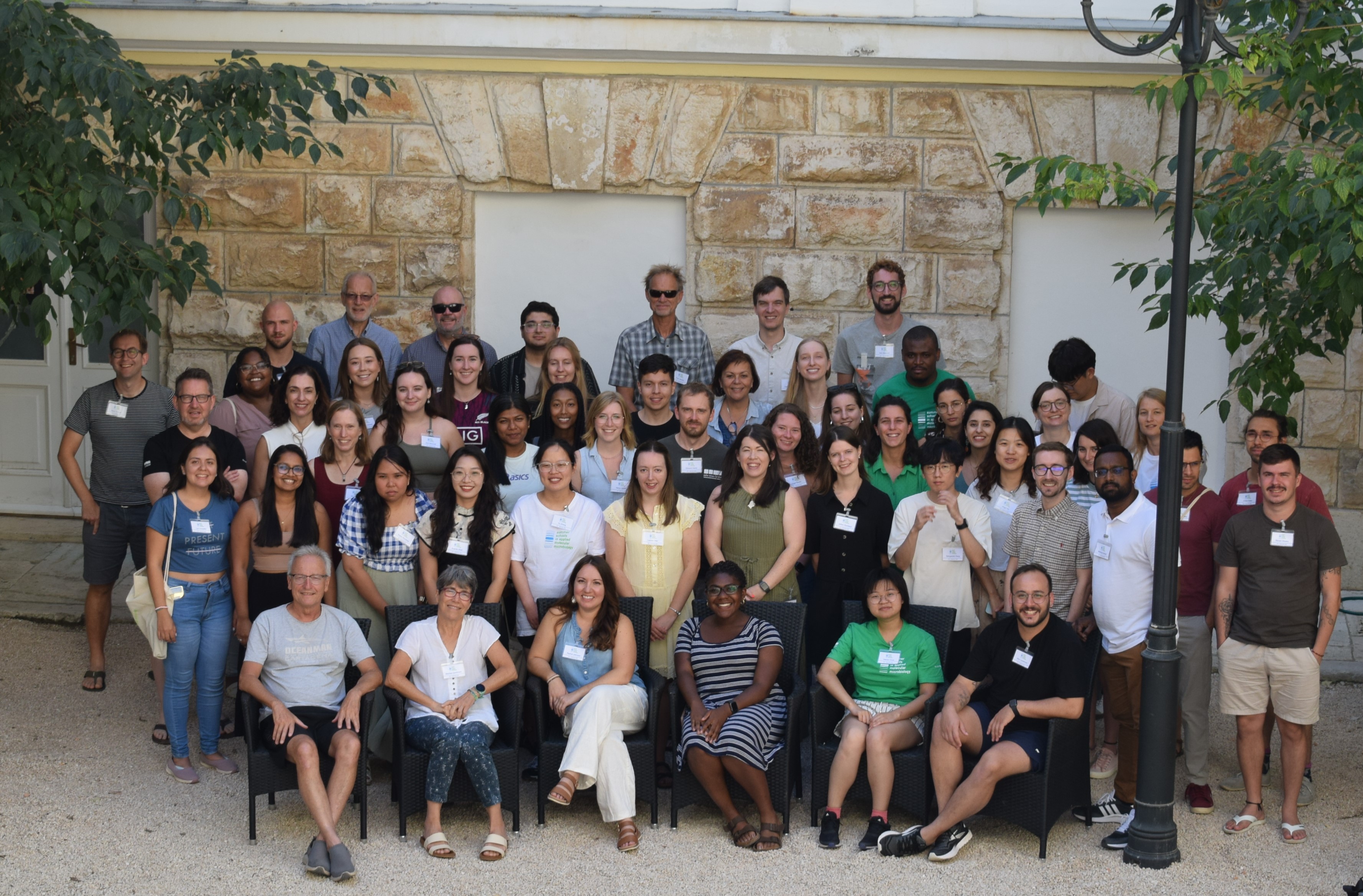
This year we selected 44 applicants from 21 countries, representing 25 nationalities, facilitated by a grant from the Wellcome Trust to defray the board and lodging costs for some applicants from less developed countries. The IUC generously covered the costs of the Croatian participants. Twenty-nine of the group were PhD students, 10 were post-docs and five had university positions. In 2007 there was a major focus on the chemistry and biosynthesis of natural products and their development as antibiotics and other drugs. This year, while including some coverage of these aspects, the subject matter ranged more widely over the roles of secondary metabolites as signalling molecules in microbial colonies and communities and on the regulation of natural product formation.

Reflecting this, half of the participants had a mainly microbiological training, with 15 coming from biochemistry or molecular biology, five from chemistry and three from other disciplines, including a physicist. They formed an amazingly coherent group and everyone learned a lot from each other. The teaching faculty consisted of Mervyn Bibb and Govind Chandra from the John Innes Centre in Norwich, Greg Challis from Warwick University, Roberto Kolter from Harvard and Flavia Marinelli from the University of Insubria, Varese, together with David Hopwood, Julian Davies and Duška Vujaklija. Mechas Zambrano from Corpogen, Bogotá, gave a guest seminar, as well as contributing to the small-group discussions, and other guest seminars were given by Miroslav Radman from MedILS and Helmut Schwab from the Technical University of Graz.

Computer workshops

As last year, hands-on computer workshops were a feature of the course. One provided familiarity with the Artemis software for the display and annotation of genomic DNA and the Artemis Comparison Tool (ACT) for whole-genome comparisons, both available for free download from the Sanger Institute web site (http://www.sanger.ac.uk/Software/Artemis and http://www.sanger.ac.uk/Software/ACT/). The second workshop introduced a web site for identifying coding sequences (www.ncbi.nlm.nih.gov/projects/gorf/) and a second site for analyzing the domain/module organisation of nonribosomal peptide synthetase multienzymes (http://www.nii.res.in/searchall.html). These websites were used to analyse a cryptic nonribosomal peptide biosynthetic gene cluster from Streptomyces coelicolor and make structural predictions about the metabolic product of this gene cluster, providing an example of the increasing power of bioinformatics for deducing details of biosynthetic pathways from DNA sequences. In spite of some problems with the computer hardware and network connections, Greg Challis, Govind Chandra and Mervyn Bibb ensured that most of the participants came away having learned a lot. We certainly plan to build on the success of this year’s workshops to make them even more central to the unique flavour of these summer schools.

Lively poster sessions

Poster sessions were again a feature of the summer school. All participants brought a poster and lively discussions took place around them.


The lectures

Julian Davies kicked off the lecture series with a talk on “The parvome: ecology, chemistry, and functions” or “The wonderful (unrecognized) world of small molecules”. Challenged the night before to cover the subject in just 11 slides he achieved the task to acclaim! Julian’s message was that small molecules should take their place along with DNA, RNA and proteins to form a new “central dogma” of biology: life would not exist with macromolecules alone. Although most people meet microbial natural products as antibiotics, this is only one of their roles. To this must be added functions such as quorum sensing, signaling, phage induction, virulence, biofilm formation, mutagenicity and other roles that may be especially important at concentrations below those at which gross antimicrobial activity is normally measured. Introducing a main theme of the summer school, Julian urged us all to increase our efforts to understand these various roles, not just to screen for antimicrobial activity in traditional ways.

Julian’s second lecture dealt with antibiotic resistance and its inexorable rise in response to the over-use and misuse of antibiotics, with the extended-spectrum beta-lactamases (CTX-Ms) as an example. Such scenarios, combined with the reluctance of many large pharmaceutical companies to stay involved with anti-infective discovery, provide a scary outlook. There is an urgent need for more understanding of the environmental “resistome” in the soil microflora and of the “subsistome” that they use to degrade and exploit antibiotics.

In her first lecture, Flavia Marinelli described the isolation and screening of secondary metabolite producing microorganisms, based on her experience in the Italian pharmaceutical industry. She introduced the large number of known examples, the range of their applications - including as antibacterial, antifungal, antitumor and antiparasitic agents and compounds with uses as immunosuppressants and siderophores - and the wide range of microbes that produce them. These of course encompass large numbers of actinobacteria (including the so-called “rare” actinomycetes), but also groups such as the myxobacteria and filamentous fungi. Effective selective methods can be applied for their isolation. Even though several of these groups have been massively screened since 1950, their potential has not been exhausted when we consider the concept of OSMAC – one strain, many compounds, often seen only under special cultivation conditions and requiring high throughput screening (HTS) for their realization. Recently the range of habitats and organisms has been widened to include marine sources and microbial groups such as the cyanobacteria. As an example of a novel discovery made possible by HTS focused on cell wall biosynthesis, Flavia described the discovery of two novel lantibiotics, planosporicin and microbisporicin, promising for the treatment of infections caused by emerging antibiotic-resistant Gram-positive pathogens.

Flavia’s second lecture dealt with fermentation and strain improvement for the industrial production of secondary metabolites. This included the traditional optimization of nutrients and other fermentation parameters, and classical strain selection. She moved on to recently described genetic approaches for the improvement of Streptomyces strains, including Koji Ochi’s “ribosome engineering” by the selection of multiply-resistant mutants and Maxygen’s technique of “genome shuffling” by multiple protoplast fusion to combine in a single strain beneficial mutations accumulated in separate lines of screening.

In the first of his two lectures on the roles of small molecules in signaling within and between species, Roberto Kolter introduced the concept of quorum sensing by homoserine lactones in Gram-negative bacteria such as marine Vibrios. He included some amazing satellite images showing huge areas of the ocean illuminated by light generated by the Lux system when the population density of the bacteria builds to a critical level. He went on to describe examples of inter-species-interactions between insects and fungi (the southern pine beetle with its mutualistic and antagonistic fungal partners), or insects, fungi and actinomycetes (the fungus-garden cultivating leaf-cutting ants), in which secondary metabolites play crucial roles as positive or negative factors in the interactions.

Describing “case studies” based on work from his own group, Roberto, in his second lecture, gave a fascinating account of work on small molecule signaling within and between Bacillus subtilis and Streptomyces coelicolor. Discovery that B. subtilis can make S. coelicolor bald (fail to develop aerial mycelium) revealed surfactin as the effector molecule. In another study, the product (bacillaene) of an orphan polyketides synthase gene cluster of B. subtilis was found to induce antibiotic production by S. coelicolor, and bacilysin was found to reverse the effect. The discovery of such multiple interspecies signaling is a striking illustration of the power of in-depth microbiological studies of the biology of microbes that is highly relevant for novel natural product development.

Mervyn Bibb’s first lecture covered the regulation of secondary metabolism and its analysis, with examples from streptomycetes. He emphasised the complex nature of such regulation, with the recognition of multi-step networks of control linking nutritional signals to the production of secondary metabolites, often in a growth-phase dependent manner, and morphological differentiation. Pathway-specific regulators and gamma-butyrolactone signalling play crucial roles in the cascades. A whole range of tools can be used to throw light on the genes involved, ranging from more traditional methods of transcription analysis (“one gene at a time”) to current microarray technology for global transcriptome studies and the use of PCR-targeting for creating precise mutations, Surface Plasmon Resonance to detect inter-molecular binding, and ChlP-on-Chip studies to determine the direct targets of DNA binding proteins.

In his second lecture, Mervyn described the mining of biodiversity for finding new antibiotics, in part drawing on his experience at Diversa Corporation in San Diego. He covered the aims and practical requirements of metagenomics, with examples from marine sources, as well as methods for the recognition of “cryptic” gene sets in the genomes of sequenced streptomycetes and attempts to “awaken” such genes to reveal potentially useful natural products that are overlooked by traditional screening approaches. The use of next generation sequencing (e.g. Solexa, 454) to identify and subsequently clone both known and cryptic gene clusters was highlighted.

Greg Challis and Govind Chandra provided a background to the computer workshops by introducing the cloning of secondary metabolic gene clusters and their analysis, from open reading frame calling through the recognition of “cryptic” – better called “orphan” – clusters, to the logic of non-ribosomal peptide synthesis. In his second lecture, Greg extended the topic by describing methods for the experimental identification of the products of orphan clusters. These include the in silico prediction of physicochemical properties to aid isolation, genomisotopic approaches, in vitro pathway reconstitution, gene knockouts combined with comparative metabolic profiling of mutant and wild type, heterologous gene expression, again combined with comparative metabolic profiling, and the manipulation of regulator genes or the addition of potentially inducing compounds to enhance metabolite production. Two examples from Streptomyces coelicolor - coelichelin and a novel small-molecule inducer of methylenomycin biosynthesis - provided clear evidence of the value of such approaches.

Duška Vujaklija spoke about “Tyrosine phosphorylation in bacteria: the puzzle of Streptomyces signalling”. While two-component signalling systems based on histidine kinase cascades are crucial in bacteria, protein phosphorylation on tyrosine, well-known in eukaryotes, was only recently recognised in prokaryotes. Duška’s group have discovered such phosphorylation on Streptomyces single-stranded DNA binding protein (SSB) and this is likely to be an important new regulatory mechanism in these organisms, with implications for differentiation and secondary metabolite formation.

In his lecture, entitled “From combinatorial biosynthesis to medicinal chemistry by genetics: the Kosan experience”, David Hopwood introduced the use of genetic engineering to understand the programming of polyketide biosynthesis and its manipulation to make libraries of “unnatural natural products”. The California-based company Kosan Biosciences was founded to exploit this technology, but soon the rise of combinatorial (robotic) chemistry made random library construction by genetics a doubtful commercial aim. The company re-tuned its efforts to a more focussed approach to improving natural products by a combination of chemistry and genetics. At the time of Kosan’s takeover by Bristol Myers Squibb in May 2008, several promising anti-cancer candidates were in clinical trials. Hopefully their value will soon become apparent.

Guest seminars

Helmut Schwab introduced a different theme from the main focus of the summer school, protein engineering by directed evolution. He covered the generation of diversity by mutagenesis and recombination, and the development of novel screening procedures, illustrated by several practical examples.

Mechas Zambrano talked about the genomics of Mycobacterium tuberculosis, drawing on the work of the Colombian Center for Research on Tuberculosis. Strains differ in characters such as low versus high transmission and infection rates in the human population and there are correlations with features of the genome. Strain-specific polymorphisms aid epidemiological studies. These are being enhanced by a project for the massively-parallel sequencing of regions flanking the sites of insertion of IS6110.

Miroslav Radman treated us to an update of the work of his group on the mechanism responsible for the extreme radiation resistance of Deinococcus radiodurans as well as of certain rotifers and tardigrades. There may well be common elements in radiation protection in these diverse organisms, perhaps involving an identifiable factor whose isolation is currently a major focus of research.

Relaxation

There were very good opportunities for relaxation. An advantage of the IUC is that swimming from a pebble beach or from rocks can be found a few minutes away and the Old City of Dubrovnik is only a five minute walk, so participants could enjoy breaks from intellectual activity even during short periods of free time.

On the middle day of the summer school we embarked on a private boat from the old harbour of Dubrovnik for an all-day excursion to the Elaphite Islands. In spite of the excellent weather all week, there was a rolling swell and the outbound voyage proved a bit of a challenge to some with sensitive stomachs, but a stop for several hours on the island of Lopud, with excellent swimming from a sandy beach, soon had everyone smiling again. Then it was back to Kolocep for a lunch at the Villas Kolocep resort (http://www.kolocep.com/) before more beach relaxation and home to Dubrovnik for dinner.

The future

The third summer school in the series will again be at the IUC, with the provisional title “Microbial Metabolites: from Signals to Drugs”. The dates will be 21-29 August 2010. Please watch the web site at:
http://www.jic.ac.uk/science/molmicro/summerschool2008/index.htm

Please draw the website to the attention of anyone who might be interested in applying.